

You’ve got a cousin arriving Tuesday, a host gift to find, and a workplace list that somehow grew to twelve names. A Thanksgiving basket can solve all three problems without looking rushed. The trick is to stop treating it as a pile of seasonal snacks and start building it around the person, the occasion, and the way the gift will travel.
The format has staying power for a reason. The American Farm Bureau Federation Thanksgiving dinner survey has tracked a standardized holiday food basket every year since 1986, giving shoppers and retailers a consistent way to think about staple foods, affordability, and seasonal pricing. A thoughtful basket borrows that same logic, then adds personality.
Why a Thanksgiving Basket Beats Every Other Last-Minute Gift
Your host has cooked for hours. You arrive with a polite smile and nothing in your hands. A bottle of wine would work, but it may not suit the meal, the recipient, or the household. A compact basket with an attractive anchor, something useful, and a small personal note feels considered even when you assembled it quickly.
The office version is just as familiar. An office manager needs gifts for several coworkers by Wednesday, but doesn’t know everyone’s favorite drink or dietary preference. A themed snack basket creates consistency without making every recipient feel as if they received a generic corporate object.
Why the format feels personal
Three details make baskets land better than a random last-minute purchase:
- Curation: A basket shows that you selected items that belong together. Coffee, chocolate, and a sturdy mug tell a clearer story than unrelated promotional merchandise.
- Usefulness: Edible gifts disappear into real life. Recipients can serve them during the holiday, share them with guests, or save them for a quiet morning.
- Visible effort: A reusable tray, coordinated wrapping, and a handwritten card make modest contents feel deliberate.
The format also works across budgets. A small coworker gift can center on coffee and one excellent chocolate bar. A family arrival kit can prioritize travel-day snacks and breakfast staples. A host basket can include one standout food item and a practical kitchen detail rather than an oversized assortment.
Curator’s rule: A basket feels generous when every item has a job. Filler makes it feel like regifting.
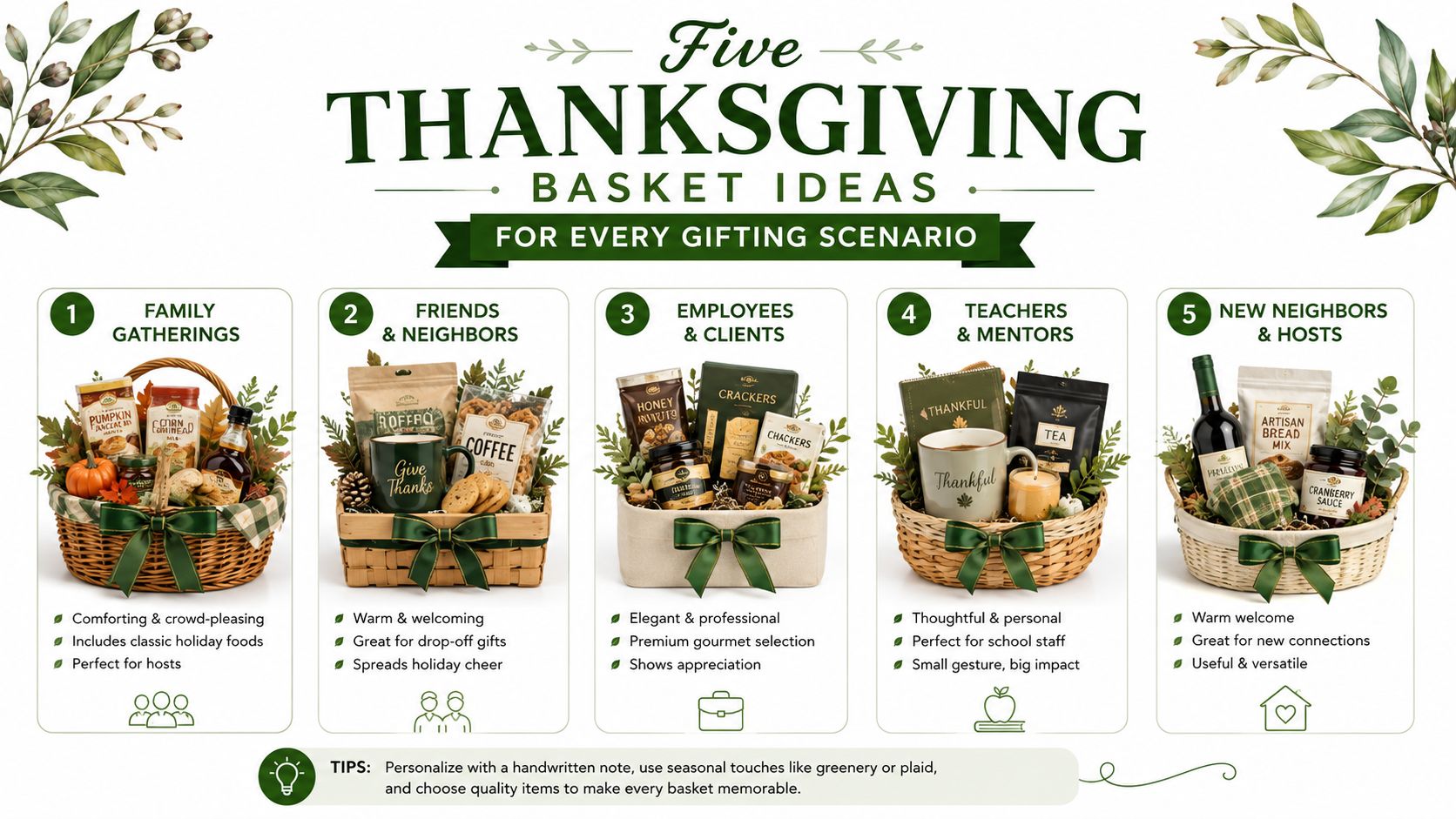
The five scenarios below cover the decisions people usually need to make quickly: a hostess gift, a coworker thank-you, a neighbor drop-off, a family arrival kit, and a charity donation. Pick the situation first. The contents become much easier after that.
The Four Building Blocks of Every Great Thanksgiving Basket
A strong Thanksgiving basket starts with structure, not shopping. Use four building blocks: the anchor item, the supporting cast, the vessel, and the finishing touch. If one is missing, the gift usually feels unfinished. If you add too much, it starts looking like a clearance bin.
Start with one clear anchor
The anchor gives the basket its identity. Choose a small-format turkey breast for a practical family gift, an artisanal jam for a neighbor, a quality coffee bag for a coworker, or a cheese selection for a host. The anchor should be the first thing someone notices and the item they remember afterward.
Then build a supporting cast around it. Three to five compatible items are usually enough for a compact gift. Pair jam with bakery bread, crackers, and a recipe card. Pair coffee with mulling spices, biscotti, and chocolate. Don’t force a sweet item into a basket that already has a strong savory direction.
Match the vessel to the recipient
The container should earn its place. A wooden tray works for a host who entertains. A cotton tote suits a local-producer theme. A reusable food-storage container can make sense for a practical family. A traditional wicker basket is fine, but it shouldn’t be automatic.
Finish with one human detail. A handwritten note, a printed recipe, or a ribbon in the recipient’s favorite color creates the emotional layer. Skip excessive shredded paper and plastic film. They add volume, not meaning.
A useful audit is simple:
- Anchor: What is the one item that defines the gift?
- Theme: Do the supporting items share a flavor, use, or purpose?
- Vessel: Will the recipient reuse the container?
- Budget tier: Does the presentation match what you can comfortably spend?
A basket I’d rather receive has seven well-matched items than fourteen unrelated ones. Removing duplicate crackers, novelty candy, and decorative trinkets often makes the remaining contents look more expensive because the recipient can see the logic.
DIY Thanksgiving Baskets Versus Ready-Made Options
DIY and ready-made baskets solve different problems. DIY gives you control. Ready-made gives you time, packaging consistency, and a cleaner shipping process. Neither is automatically more thoughtful.
| Factor | DIY Basket | Ready-Made Basket |
|---|---|---|
| Time | Requires shopping, assembly, wrapping, and address coordination | Reduces assembly work and can simplify delivery |
| Personalization | Highest control over flavors, uses, and notes | Usually limited to available assortments and message options |
| Presentation | Depends on your packing materials and visual judgment | Usually follows a consistent professional format |
| Dietary planning | You inspect every label yourself | Some assortments provide clearer dietary information |
| Perishable risk | You manage temperature control and timing | The seller typically manages packing and fulfillment procedures |
| Best fit | A specific recipient when you have time to assemble | A deadline, multiple recipients, or long-distance delivery |
DIY is the right choice when you know the recipient well and can shop without rushing. It lets you choose a favorite bakery, a local preserve, or a particular coffee roast. It also lets you avoid ingredients the recipient dislikes instead of hoping a prebuilt assortment gets it right.
Ready-made is the sensible choice when the deadline is close, recipients live in different places, or presentation matters more than fine-grained customization. A curated discovery platform such as Kudosz’s graduation gift basket collection illustrates the broader model, shoppers compare themed baskets from selected merchants rather than assembling every component themselves.
Make the decision quickly
Choose DIY if you have a free weekend, a nearby recipient, and a clear idea of their tastes. Choose ready-made if you need the package shipped Tuesday, need several gifts to look consistent, or don’t want to manage perishable packing.
One warning: don’t assume DIY is always cheaper once you count the vessel, filler, wrapping, delivery, and your time. Conversely, don’t pay for a large ready-made assortment when a small, focused gift would suit the recipient better.
Five Thanksgiving Basket Ideas for Every Gifting Scenario
The right basket depends on the moment it needs to solve. A host needs something that complements a gathering. A traveler needs food that survives an arrival day. A food bank needs useful staples, not decorative packaging.
For the hostess who already has everything
Use a small-format cheese or a distinctive jam as the anchor. Add sturdy crackers, a scented candle, and a seasonal kitchen towel. If alcohol fits the household, a bottle of wine can replace the candle, but don’t make it the default.
Keep the presentation compact in a wooden tray. Tuck the note beneath the crackers so it appears after the recipient lifts the first layer. This gift says, “I noticed the work you put into hosting,” without competing with the dinner.
For the coworker you want to thank
Build a compact snack tower around coffee. Add mulling spices, a chocolate bar, and perhaps a small pack of cookies. Choose individually packaged items if the gift will sit in an office kitchen.
A slim box or reusable tumbler makes more sense than a large basket. Keep the price floor modest and consistent across the team, then personalize the card rather than creating unequal-looking gifts.
For the neighbor who always shares
Make bakery bread the anchor. Add local jam, a small bag of roasted seeds or nuts when appropriate, and a handwritten recipe card. This combination feels neighborly because it invites sharing rather than presenting a formal corporate gift.
Wrap the bread separately in paper and place the jam beside it, not beneath it. Include a recipe the neighbor can use with the jam or bread. Skip fragile decorations that will be discarded before breakfast.
For family arriving after a long trip
Create a travel-day survival kit. Pack sparkling water, salty snacks, breakfast bars, fruit that travels well, and napkins. This basket solves the awkward gap between arrival and the first full meal.
Use a reusable tote that guests can carry from the car or airport. Put breakfast items at the top and indulgent snacks underneath. The best presentation here is practical, not precious.
For a food-bank donation
Start with shelf-stable proteins, grains, and produce, then check the organization’s current donation guidance before buying. Canned beans, whole-grain pasta, rice, canned vegetables, and fruit can be more useful than a decorative assortment, but local policies differ.
Use a sturdy box rather than a fragile basket if the organization will sort or distribute the goods. Avoid expired products, damaged packaging, and items requiring refrigeration unless the food bank specifically requests them. The ReFED analysis of Thanksgiving food waste estimated about 320 million pounds of food, worth roughly $550 million, were wasted in the United States on Thanksgiving in a single day. A carefully planned donation supports people while reducing the chance that good food becomes unusable.
Dietary-Friendly Thanksgiving Baskets That Still Feel Special
Dietary needs should shape the basket from the start, not appear as a tiny “free-from” substitute at the end. Build around flavor and purpose first, then verify every label.
For a gluten-free basket, choose baked goods and crackers made with almond flour or chickpea bases, but confirm the package’s production information. Pair them with fruit preserves, roasted seeds, or chocolate so the basket has variety without relying on bread-like replacements.
A vegan basket can use plant-based cheese alternatives, coconut-based chocolate, roasted vegetables in jars, coffee, tea, and fruit spread. If the basket includes a dairy alternative that must remain chilled, review practical guidance on the cold chain for dairy alternatives before shipping it.
Build around the restriction without announcing it
For a nut-free recipient, make seeds, roasted chickpeas, popcorn, and sunflower butter cups the anchors. Don’t place a nut-free product beside mixed nuts and call the basket safe. Cross-contact can happen during manufacturing or home assembly, so read advisory statements and disclose what your kitchen handles.
Low-sugar gifts can still feel festive. Choose fruit, unsweetened tea, stevia-sweetened jam when suitable, and dark chocolate at 85 percent or higher. Avoid presenting the basket as a health correction. A beautiful tin, a good card, and a clear flavor theme matter more than a pile of “diet” labels.
Use a visible ingredient card listing allergens and preparation notes. Keep original packaging whenever possible, and don’t transfer food into unmarked jars. If you’re uncertain about a product, replace it with a clearly labeled shelf-stable option rather than making a guess.
Purpose-Led Baskets That Go Beyond Sweet and Salty Fillers
A wicker tray filled with generic cookies and mixed snacks isn’t automatically thoughtful. It becomes thoughtful when the contents express a clear point of view. Current gift-trend commentary highlights interest in personalization, reuse, sustainability, and ethical sourcing, with one report stating that nearly 20 percent of consumers prefer sustainable and eco-friendly gift options (Our Green House trend commentary).
Choose local provenance
Build around a regional cheesemaker, coffee roaster, bakery, or jam producer. Add a reusable cotton tote and a small card naming the makers. The basket may cost more than a mass-market assortment, but the premium buys a story and a stronger connection to place.
Don’t scatter products from unrelated regions just to fill space. Two or three excellent local items create more impact than a crowded selection with no shared identity.
Tie the basket to food security
A cause-led basket can include practical food staples while directing support toward a food-security nonprofit. If you’re gifting employees or clients, explain the purpose plainly. Recipients should understand whether the items themselves, a purchase, or a separate contribution supports the cause.
For larger workplace efforts, coordinate with a local food bank before purchasing. Food Bank of Iowa reported distributing 871 baskets and serving 1,985 individuals through a holiday program, showing how seasonal basket distribution can operate as part of organized community support.
Make the vessel do more work
A zero-waste basket replaces disposable presentation with useful containers. Try mason jars for grains or spices, beeswax wrap for bread, and refillable spice tins. A sturdy tote, glass storage, or wooden tray gives the recipient something to use after the food is gone.
The honest trade-off is that reusable vessels and traceable products can raise the price. That’s acceptable if you choose fewer items and make the purpose visible. Skip cheap “eco” decorations that can’t be reused.
Building a Thanksgiving Basket Without Blowing Your Budget
Recent retail data showed the cost of a classic Thanksgiving basket for 8 to 10 people rose by just over 7 percent year over year, while cranberry sauce rose by nearly 46 percent and pumpkin pie mix dipped 5 percent (Datasembly’s Thanksgiving 2025 pricing analysis). Those shifts make one rule especially useful: upgrade the item people remember, not every item in the basket.
At a modest tier, choose coffee, a chocolate bar, mulling spices, and a reusable mug. At a middle tier, add a bakery item, preserves, and a better vessel. At a generous tier, choose a premium anchor such as artisan cheese or a curated meal component, then keep the supporting foods simple.
Spend where taste is obvious
Upgrade the anchor, chocolate, or centerpiece. Downgrade generic crackers, bulk snacks, and private-label sparkling cider when the flavor difference won’t matter to the recipient. Use seasonal substitutions when a staple spikes in price, but don’t replace a dietary necessity without checking first.
Pooling also makes sense for a host gift. Two guests can contribute to one coherent basket rather than arriving with duplicate bottles, candles, and chocolates. The result looks intentional, and the host receives something useful instead of several small assortments.
Shipping and Food Safety for Perishable Thanksgiving Baskets
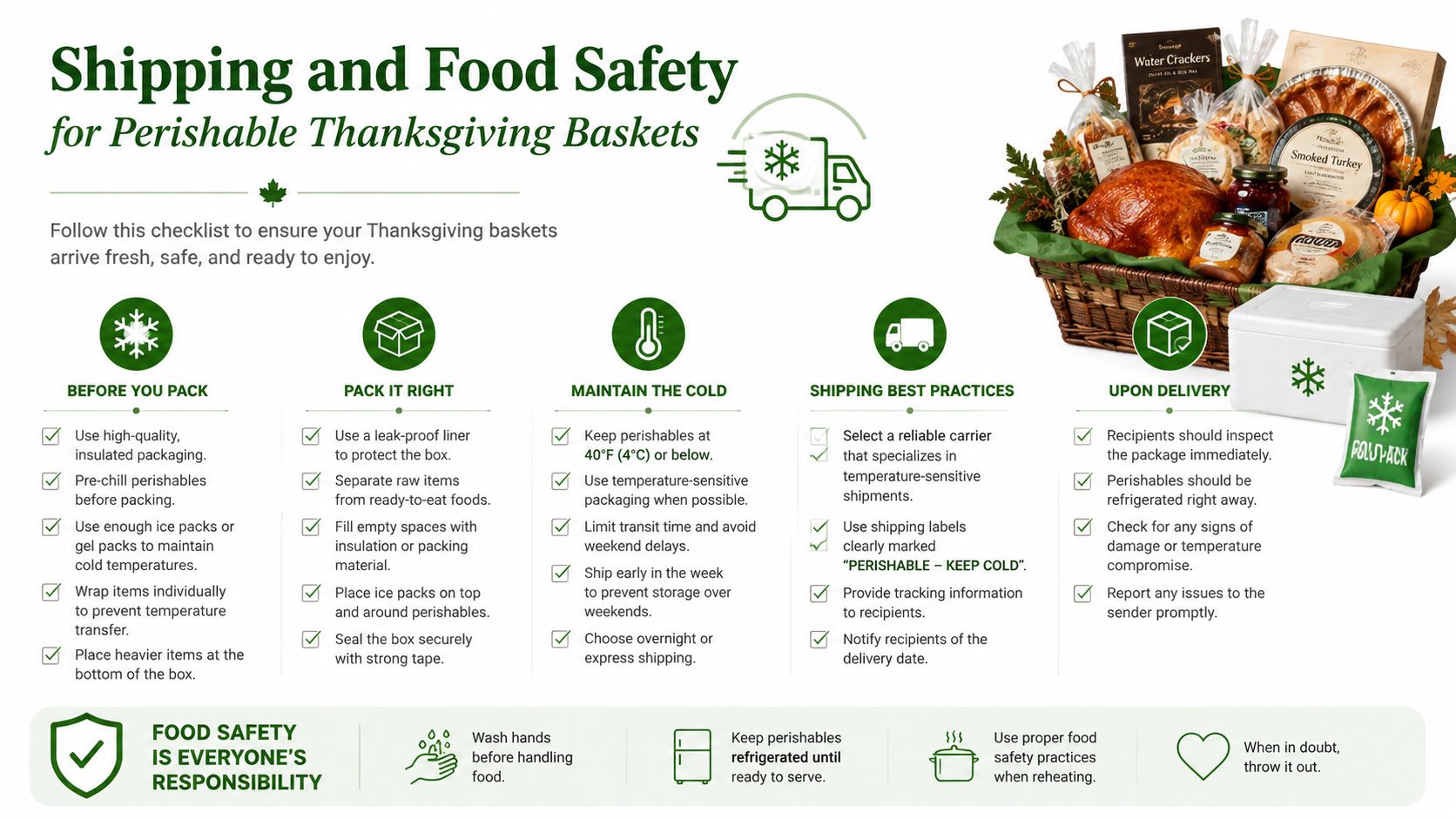
Perishable baskets require a packing plan, not optimism. Cold foods must stay at 40°F (4°C) or below, hot foods must remain at 140°F (60°C) or above, and food left in the 40°F to 140°F danger zone for more than two hours should be discarded, according to FoodSafety.gov’s Thanksgiving donation guidance.
For most shipped gifts, cold and shelf-stable foods are easier to manage than hot foods. Separate crackers, cookies, nuts, spice blends, and jams from cheese, cooked sides, or dairy-filled desserts. Shelf-stable items won’t need the same insulation or delivery speed, and they won’t become damp from melting ice packs.
Pack perishables for the actual journey
Freeze perishables solid before packing when the product permits it. Use a sturdy corrugated box with foam or other insulation, add gel packs or dry ice as appropriate, and fill empty space so the contents don’t shift. A practical overview of insulated delivery options is available in MSP Packaging’s thermal bag guide.
Label the outer package clearly:
- Keep Refrigerated: Use this for chilled foods that require prompt storage.
- Perishable, Keep Refrigerated: Make the warning easy for a recipient or carrier to see.
- Recipient notification: Tell the recipient when the package is arriving and what to do first.
Ship early in the week so a delay doesn’t leave the basket sitting through a weekend. Avoid a Friday dispatch unless the carrier guarantees a suitable delivery window and the recipient will be available. For dry goods, a simple sturdy box may be enough. For cheese or prepared foods, temperature control is the design constraint.
Make the final choice based on the recipient
Choose the hostess basket for a dinner invitation, the compact coffee basket for coworkers, the bread-and-jam basket for a neighbor, and the travel kit for arriving family. Choose the donation box only after confirming the food bank’s needs. For a deadline, multiple addresses, or fragile perishables, use a curated marketplace such as Kudosz rather than improvising a shipment the night before.
Pick one anchor, remove filler, label dietary information, and confirm the delivery plan today. Your recipient doesn’t need an enormous basket. They need a gift that fits their life and arrives ready to enjoy.
Choose your recipient and scenario now, then assemble or order the basket before your shipping window closes. A focused Thanksgiving gift with one memorable anchor will always beat a larger box of forgettable extras.