

Most advice about snack gift baskets starts with the wrong question. It asks what looks impressive, not what feels thoughtful, useful, and worth the price.
That’s why so many baskets disappoint. They arrive stuffed with generic crackers, filler cookies, and a few branded extras that could have come from a grocery run, then get wrapped in enough ribbon to hide the weak curation. A good basket isn’t the one with the most items. It’s the one that feels deliberately chosen for the person opening it.
The market behind these gifts is not small or fleeting. The global gourmet food gift basket market was valued at $2.8 billion in 2025 and is projected to reach $4.2 billion by 2034, with online stores already representing 42.3% of revenue, about $1.18 billion in 2025 source. That growth tells you something important. Buyers want convenience, but they’re also getting more selective about value.
Why Most Snack Gift Baskets Disappoint and How to Pick Winners
A lot of snack gift baskets miss the mark for the same reason cheap catered platters do, they look full but feel disposable. The buyer ends up paying for ribbon, filler, and box weight instead of snacks the recipient would choose. The result is a pile of items that could have been assembled faster at a grocery store.
The test is curation, not quantity
The first thing I look for is a small set of recognizable brands or specialty items that show judgment, not just shelf-stable filler. If every item could be swapped with something from a gas-station shelf, the basket is padding. If it combines familiar names, harder-to-find snacks, and a clear flavor theme, the curation is real.
Freshness matters too. Snack gifts are eaten, not displayed, and nobody enjoys a stale pretzel wrapped in shiny film. A reputable basket gives clear freshness expectations, uses packaging that protects the contents, and shows enough product turnover that the snacks still feel current when they arrive.
Practical rule: if you could recreate the basket with one supermarket trip and no real thought, it is probably not premium.
The broader gift basket category backs up the point. Analysts at Congruence Market Insights report continued growth in the gift baskets market, and that scale explains why low-effort repacks keep showing up alongside curated options. Shoppers have more choices than ever, but that does not make every basket worth buying.
What separates premium from overpriced filler
Premium baskets usually do at least one of three things well. They include a recognizable anchor brand, they introduce items you would not easily find locally, or they solve a real convenience problem by arriving polished and ready to send. If none of that is true, do not pay gift-box pricing for snacks you could buy yourself.
Presentation still matters, but only after substance. Clean wrapping, sturdy packaging, and a basket that holds up in transit all signal care. Cellophane alone does not create value. It only exposes weak selection if the contents are boring.
The best buying philosophy is direct. Choose the basket that feels intentional, constrained, and specific. Bigger is not better. Better is better.
Types of Snack Gift Baskets for Every Occasion
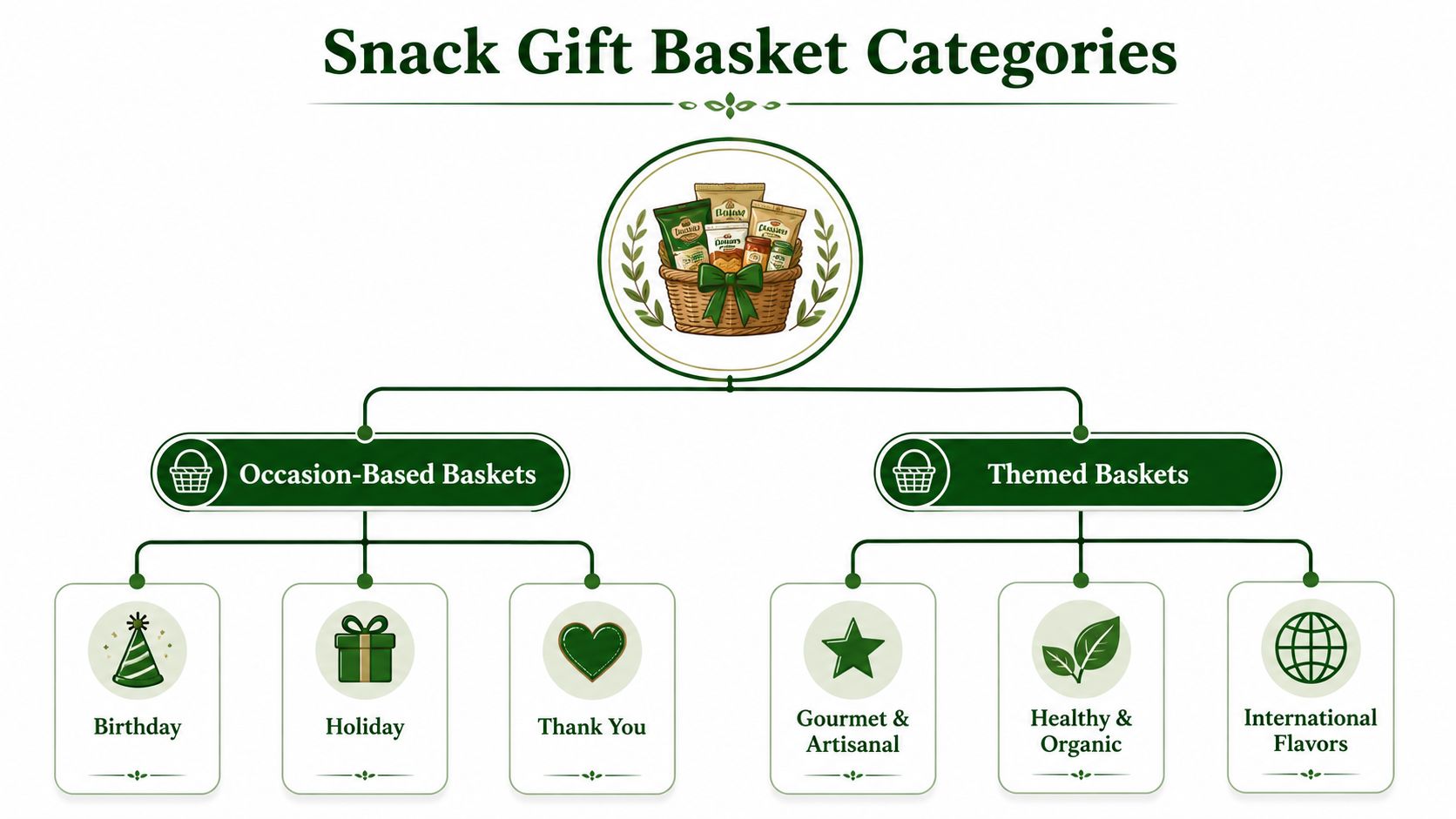
Different basket types solve different gifting problems. A birthday basket should feel celebratory. A corporate basket should feel polished and safe. A movie-night basket should feel fun, not precious. If you match the type to the occasion, the gift stops feeling generic.
Occasion-based baskets
Birthday baskets work best when they feel personal and playful. They don’t need luxury ingredients. They need a clear flavor personality, maybe sweet-leaning, maybe salty, maybe a mix that reflects the recipient’s actual tastes. The wrong move is making it look like a corporate sampler in birthday paper.
Holiday baskets can be more indulgent because the context already supports generosity. They’re usually strongest when they lean seasonal, with chocolate, candy, or celebratory snacks that feel festive instead of random. If you’re shopping for a graduation, a dedicated collection like graduation gift baskets makes more sense than forcing the wrong theme.
Thank-you baskets should be cleaner and more restrained. Think polished packaging, a few premium items, and a message that says appreciation rather than excess. For clients or colleagues, that restraint reads as taste.
Themed baskets
Gourmet and artisanal baskets are the best fit for food people. These are the ones that should justify higher pricing through better brands, unusual flavors, or strong presentation. They work well for hosts, clients, and anyone who notices details.
Healthy and organic baskets are the safer pick for wellness-minded recipients. The key is not to make them feel like punishment food. If the contents are too austere, the gift loses warmth.
International flavor baskets are useful when you know the recipient likes discovery. They’re a good way to send something memorable without defaulting to sweets.
A basket should match the moment first, the aesthetic second, and the filler never.
For shoppers who want a fast way to narrow the field, the market’s long-term growth matters too. The broader category’s steady expansion, including a 6% CAGR outlook to $19.05 billion by 2035 source, shows that buyers keep returning to baskets because the format is flexible, not because every basket is great.
How to Choose the Right Basket for Your Recipient
Start with the person, not the catalog. That sounds obvious, but it’s where most bad gifts begin. A basket that fits the recipient’s habits will always land better than a flashy one that fights their preferences.
Match taste, context, and tolerance for novelty
First, decide whether they lean sweet, savory, or balanced. People usually have a stronger preference than they admit. If you guess wrong here, the whole basket feels off, even if every item is expensive.
Second, think about the occasion. A corporate client gift should be more restrained than a college care package. A get-well basket should favor comfort and familiarity over adventurous flavors. A housewarming basket can be more flexible because the gift is less emotionally formal.
Third, decide how much risk you want in the selection. If you know the recipient well, a custom-leaning basket is smart. If you don’t, keep the flavor profile cleaner and the assortment narrower.
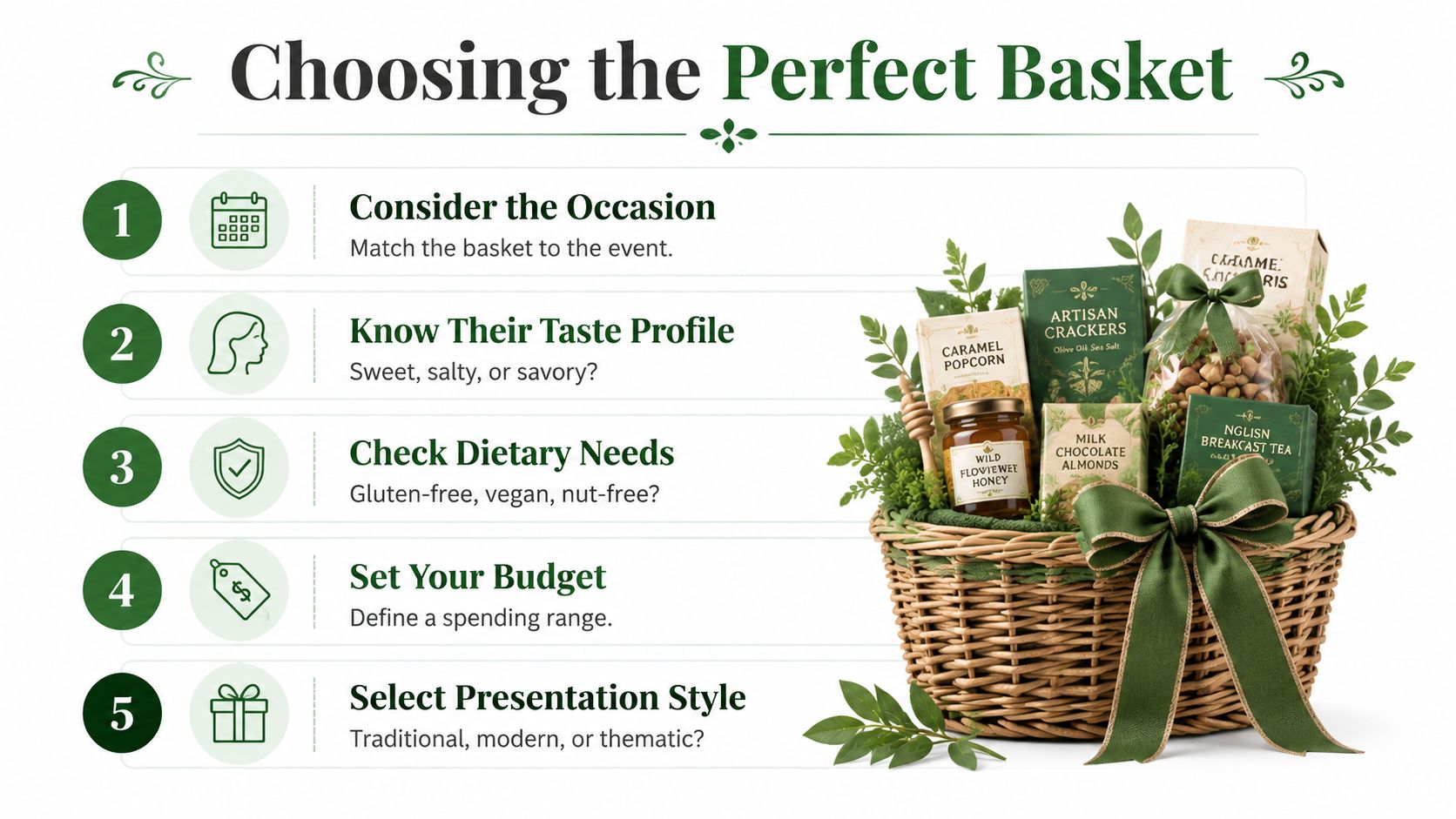
Use a simple filter before you buy
- Occasion first: A thank-you gift and a new-baby gift should not look the same.
- Taste profile second: Sweet-only, savory-only, or a controlled mix beats random variety.
- Dietary reality third: If you’re unsure, choose items with clearer labeling and fewer ingredients.
- Presentation fourth: Formal occasions need cleaner packaging than casual ones.
- Delivery timing last: If it has to arrive by a certain date, don’t choose a basket with uncertain shipping.
A corporate gift and a college care package can both be snack baskets, but they should communicate different things. One says polish and consideration. The other says comfort and easy enjoyment. If the message feels wrong, the recipient notices it immediately.
The safest rule is this. Choose the basket that solves the recipient’s actual situation, not the one that looks busiest on the product page.
Navigating Dietary Restrictions and Allergy-Safe Gifting
Most snack gifting guides stop at telling people to read labels. That’s not enough when the basket is going to a mixed-diet household, a new parent, a colleague, or someone recovering from illness.
Fewer items often means a better gift
A thoughtful allergy-aware basket is usually more constrained, not more abundant. That’s the contrarian truth. Fewer SKUs mean fewer surprises, fewer hidden ingredients, and less anxiety for the recipient. The gift feels safer because it is easier to evaluate.
The most useful format is a basket built around a single dietary lane. Nut-free, gluten-free, dairy-free, vegan, or keto-friendly baskets work best when they stay disciplined. The moment you mix too many categories, you create confusion, especially if family members share the snacks.
The underlying content gap is real. Mainstream snack-basket advice tends to repeat broad “sweet and savory” ideas and generic presentation tips, while ignoring the practical decisions that matter most at gifting time. Shoppers need clearer guidance on how to make a basket trustworthy without making it look clinical source.
Check the basket like a cautious shopper
Read the ingredient list, not just the headline claim. “Made in a facility” language matters if the recipient has a serious allergy. So does the order of ingredients, especially in baskets that contain sauces, chocolates, baked items, and seasoned snacks.
Look for certified labeling where possible, especially for baskets that will be shared at work or at home. Online filters help, but they’re not a substitute for the product page. If the seller is vague about allergens, skip it.
The safest basket is the one a recipient can open without guessing.
Use these rules for high-stakes gifts:
- Choose simpler assortments: Fewer ingredients create less uncertainty.
- Avoid mixed buckets of snack types: One risky item can make the whole basket unusable.
- Communicate clearly: If you’re sending directly, note the restriction in the gift message.
- Prefer sellers with explicit labeling: Ambiguity is the enemy here.
Corporate gifting, new-baby gifts, and get-well packages deserve the most caution because the basket may be shared, stored, or opened in front of others. If you’re unsure, it’s better to be slightly plain than slightly risky. A safe basket that gets eaten is far better than a flashy one that gets set aside.
Curated Baskets Versus DIY and When Each Makes Sense
This is the value question, and you should answer it directly. Some baskets are worth paying for. Others are just grocery-store items in a prettier container.
| Factor | Curated Basket | DIY Basket |
|---|---|---|
| Convenience | Fast, especially for last-minute gifting | Takes time to source and assemble |
| Presentation | Usually polished and gift-ready | Depends on your packaging skill |
| Item quality | Can include premium or hard-to-find snacks | Only as good as what you shop for |
| Customization | Limited to what the seller offers | Highly tailored to the recipient |
| Value | Worth it when curation, shipping, or branding matter | Better when you know the recipient well |
When curated wins
Curated baskets make sense when time is tight, shipping matters, or the occasion needs a clean professional finish. They’re also the better call for corporate orders because consistency matters more than improvisation. If you need ten gifts that all arrive looking right, DIY becomes a headache fast.
They’re also useful when the basket contains items you wouldn’t easily source locally. That’s where a curated gift earns its markup. If the seller is introducing brand recognition, niche products, or true visual polish, you’re paying for more than a repack.
When DIY wins
DIY is smarter when you know the recipient’s taste intimately. If you already know they love a specific hot sauce, a certain chocolate bar, or one particular cracker brand, you can build a stronger basket yourself. You’ll spend less on presentation and more on actual favorites.
DIY also wins when you want to control every ingredient for dietary reasons. That matters in allergy-safe gifting, where a custom box can be safer than a broad retail assortment.
My rule: buy curated for speed, consistency, and presentation. Build your own when taste knowledge is precise and the gift can be narrow.
One practical middle ground is using a discovery platform like Kudosz, which organizes handpicked baskets by occasion and lets you compare options without starting from scratch. That works well when you want the convenience of curation without browsing random low-quality listings.
Customization Add-Ons and Shipping Tips for Maximum Impact
A decent basket becomes memorable when the finish feels personal. The details matter, but only if they support the core gift. Don’t add extras that create clutter or weaken the theme.
Add-ons that improve the gift
A personalized note is the easiest win. It costs almost nothing and makes even a simple basket feel directed at one person. Branded packaging works well for client gifts because it keeps the presentation clean and professional.
Ribbon upgrades, gift tags, and a small add-on item can help if they fit the basket’s tone. A bottle of wine, a candle, or a spa item can make sense, but only if the snack assortment still feels central. If the add-on starts stealing attention, the basket loses focus.
Shipping choices that protect the gift
Order earlier than you think you need to. Food gifts are less forgiving than nonperishables when weather, carriers, or warehouse delays get involved. If the basket contains temperature-sensitive items, ask how the seller handles transit and storage before you buy.
Track the shipment closely once it leaves. If the package arrives damaged, document it immediately and contact the merchant the same day. That’s especially important for corporate gifts, where a crushed basket looks careless even if the sender didn’t pack it that way.
A good shipping policy should feel boring, not mysterious. Clear timelines, sturdy packing, and direct communication beat a fancy product page every time.
Where to Buy the Best Snack Gift Baskets Online
If you want a basket that feels worth the money, start with a curated source that screens out the filler. That saves you from listings padded with cheap crackers, generic candy, and packaging that looks fuller than the basket is.
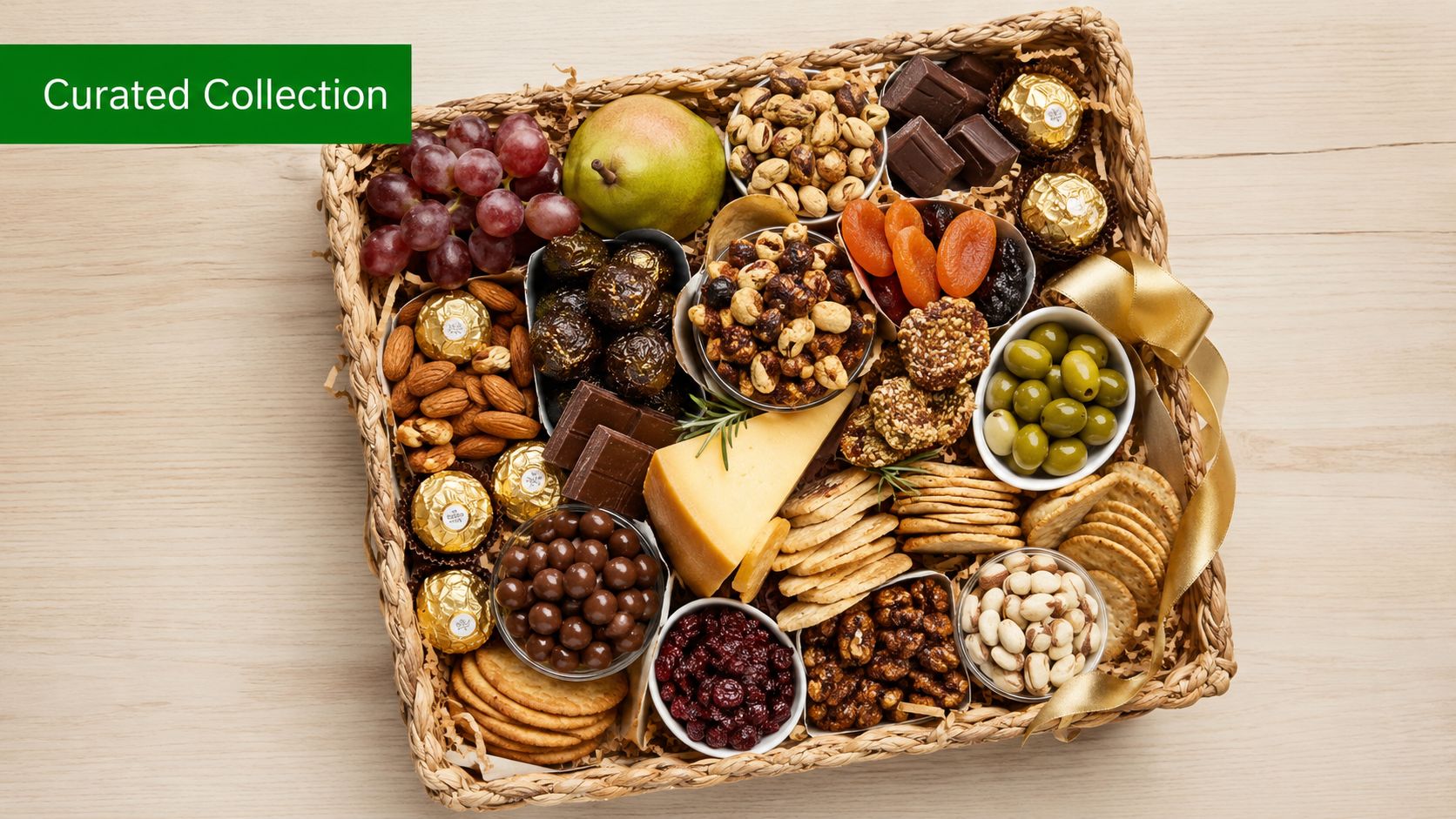
Kudosz organizes basket picks by occasion, including birthday, thank-you, employee appreciation, get-well, new baby, and other common gifting moments. That setup makes comparison easier because you can move straight to baskets that fit the reason for the gift instead of sorting through random search results. It also helps shoppers compare gourmet snack assortments and branded options from merchants across the web without guessing which listing is thoughtful.
The fastest way to choose well is to judge three things together, the occasion fit, the actual contents, and the presentation. If the basket looks polished but the assortment is weak, skip it. If the contents are strong but the presentation feels sloppy, skip it. The baskets worth sending usually do all three jobs at once.
A better basket also respects the recipient’s diet and allergies. Check labels carefully, ask whether the seller handles common allergens, and avoid baskets that bury that information in fine print. A pretty assortment is useless if it creates risk for the person receiving it.
Curated baskets are not always the smarter buy. If you know the recipient well and can shop with a clear theme, DIY often beats a prepacked box because you control every item and avoid paying for filler. If you need speed, polished presentation, or a gift for a group, a curated basket still makes sense. The point is to buy with judgment, not just from the biggest thumbnail in the results.
If you want something that feels deliberate, start with a short list, compare the ingredient lists, and pick the basket that looks made for one person instead of a generic audience. That is the difference between a gift that lands well and one that feels like a repacked grocery run.