

You’re standing there with a card in one hand and too little time in the other, trying to decide whether a fruit gift basket is thoughtful or just safe. A colleague is recovering at home, a client just signed, or a new parent hasn’t slept in days, and the question is simple: is fruit the right gift, or is it the default because you ran out of better ideas?
A good basket isn’t just a pile of produce in wicker. It’s a choice between freshness, shelf life, presentation, and delivery risk, and the wrong pick can turn a nice gesture into a bruised, overripe mess. The smartest buyers compare fruit against snack baskets, chocolate baskets, and mixed gourmet baskets before they click buy, because the best gift is the one that fits the occasion and the recipient’s reality.
Why a Fruit Gift Basket Might Be the Right Move
A friend gets discharged after surgery. A coworker is back home but still not ready for a big meal. A client’s assistant asks for something polished, not personal, and definitely not awkward. In those moments, fruit gift baskets make sense because they feel generous without being heavy, indulgent without being fussy, and broadly acceptable when you don’t know the recipient’s preferences well.
That’s the practical appeal. A fruit basket is usually a curated mix of whole fruit, sometimes paired with cheese, nuts, or sweets, arranged for gifting rather than groceries. The broad market for gourmet food gift baskets was valued at $2.8 billion in 2025 and is projected to reach $4.2 billion by 2034, with fruit gift baskets holding 13.8% of share in 2025, according to MarketIntelo’s gourmet food gift basket market report. Fruit is not the whole market, but it’s a meaningful slice of it.
Where fruit actually shines
Fruit works best when you want something that looks caring, travels reasonably well, and doesn’t lock you into a specific snacking style. It’s a strong fit for get-well notes, new baby gifts, housewarmings, and many thank-you occasions. It also works when you want the gift to feel lighter and more wholesome than a snack tower loaded with chips, sweets, and candy.
Practical rule: If you don’t know the recipient’s snack preferences, fruit is safer than a highly specific gourmet assortment, but only if the delivery window is short and the fruit is packed correctly.
Fruit can also be the right move when the presentation matters but you still want the contents to be useful. A beautiful basket that gets eaten beats a dramatic display that sits untouched. That said, fruit is not automatically the smarter gift. If the recipient has limited refrigeration, a strict workplace policy, or a long delivery chain, fruit starts to lose its edge fast.
The Main Types of Fruit Gift Baskets Explained
Classic fresh fruit baskets
This is the straightforward version, whole apples, oranges, pears, and sometimes grapes or berries, arranged in a woven basket or a gift box. It looks clean, bright, and familiar, which is why people reach for it when they want a dependable gift that feels healthy and unfussy. Think of it as the closest thing to a farmers market in a box.
Classic fresh baskets suit get-well gifts, thank-yous, and family occasions where the recipient can enjoy the fruit quickly. The catch is freshness management. These baskets are only a good buy when the vendor packs them with shipping in mind, not just display appeal.
Premium orchard assortments
Orchard-style baskets lean into better-looking fruit, seasonal specialty picks, and a more refined presentation. They’re the version you buy when you want the gift to feel more curated and less generic. A basket like this is often the one people choose for clients, milestones, or holidays, because it reads as thoughtful instead of purely practical.
These are usually the most visually impressive fresh baskets, but they’re also the ones most likely to disappoint if the fruit is overhandled, packed too tightly, or sent too far in advance. You’re paying for curation, not magic.
Dried and preserved fruit towers
This is the care package that travels well. Dried apricots, preserved fruit, fruit leathers, and related shelf-stable pieces ship more safely and tolerate delays better than fresh produce. If you’re sending to an office, across the country, or into a warm season, this format is often smarter than fresh fruit.
Mixed gourmet baskets
These combine fruit with cheese, chocolate, nuts, crackers, or baked goods. They suit recipients who want variety, and they solve one common problem with pure fruit baskets, they feel more substantial when the occasion calls for a fuller gift. They’re especially useful for corporate gifting, because they can be more flexible than fruit alone.
| Basket Type | What’s Inside | Best For | Watch Out For |
|---|---|---|---|
| Classic fresh fruit basket | Whole fruit, simple arrangement | Get well, thank-you, family gifts | Bruising and short shelf life |
| Premium orchard assortment | Seasonal fruit, more polished presentation | Clients, holidays, milestone gifts | Can look better than it ships |
| Dried and preserved fruit tower | Shelf-stable fruit, preserved items | Long-distance shipping, offices, warm weather | Less “fresh” feeling |
| Mixed gourmet basket | Fruit plus cheese, chocolate, nuts, baked goods | Corporate gifts, broad audiences | Allergens and dietary fit |
Matching Fruit Baskets to the Right Occasion
For get well gifts, I’d choose a modest fresh fruit basket if the person is at home and likely to eat it within a day or two. If they’re in a hospital with a long stay, ask first. Restricted diets, unit rules, and limited refrigeration make fruit a worse bet than a snack box or a shelf-stable assortment. A small card does more good than an oversized basket.
For sympathy gifts, keep it restrained. A smaller fruit basket can feel caring without overwhelming a grieving household, but an elaborate display can feel tone-deaf when people already have too much to manage. I’d skip anything oversized and avoid anything that creates more cleanup than comfort.
Corporate orders are a different game. If you’re sending to an office, a mixed gourmet basket or preserved fruit basket is usually smarter than fresh fruit, especially when you can’t guarantee immediate refrigeration or personal delivery. For Canadian shoppers comparing options, you can browse Canadian gift baskets from Online Gifts Canada and look for formats that match the office setting instead of forcing fruit into every scenario.
For new baby, housewarming, and thank-you gifts, fruit is a solid middle ground. It feels useful, clean, and easy to share. Holidays are where the decision gets more personal, because fruit competes with chocolate and snack gifts on visual impact. If you want occasion-specific comparisons beyond fruit, graduation gift baskets show how presentation changes when the recipient is celebrating rather than recovering.
Fruit is not the safest universal gift. It’s a good fit when the recipient can unpack it quickly, eat it soon, and doesn’t have a reason to avoid perishables.
How to Judge Freshness and Construction Before You Buy
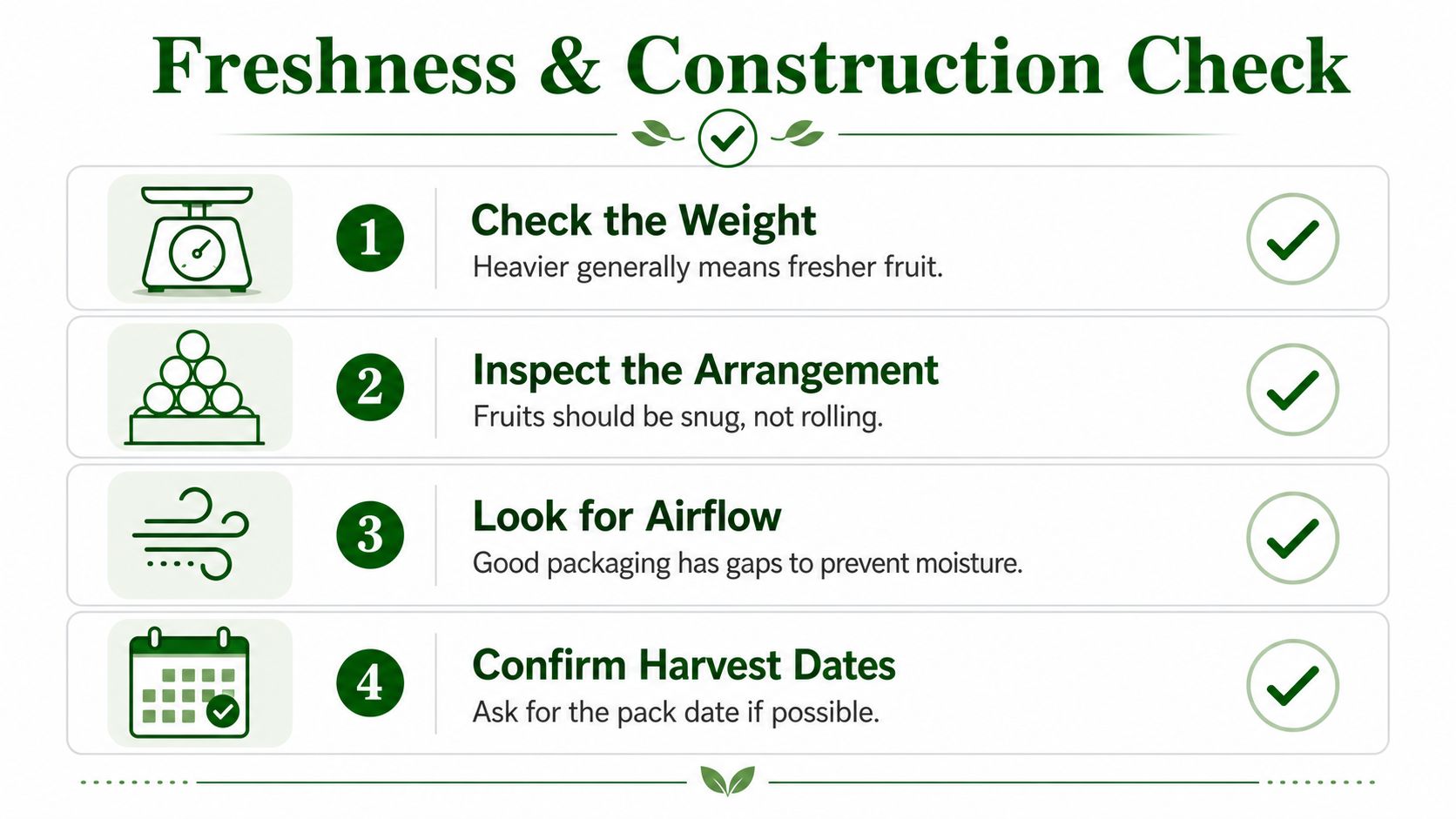
The prettiest basket isn’t always the best-built one. If a vendor hides the dimensions and only talks about ribbon, you’re looking at a presentation-first listing, not a shipping-first listing. That matters because fruit that arrives bruised is a wasted gift, no matter how nice the bow looks.
What the build tells you
Retail examples show market-standard gift baskets often weigh about 11 to 13 lb and use shipping cartons around 16 x 11 x 11 in or 18 x 12.2 x 12 in, while the internal basket itself may be roughly 13.75 x 9.13 x 6.75 in. That combination matters because more fill weight with less headspace raises compression damage and bruise risk during transit, according to the product example at 1800Baskets. In plain English, if the basket is packed like a tower, the fruit suffers.
A better buy gives fruit room to breathe. Industry buying guidance recommends baskets with at least 10 to 20 lb capacity, roughly 12 to 18 liters of internal volume, 14 to 20 in diameter, and 6 to 10 in height, plus open weaves or slats and 2 to 3 in clearance for ventilation, as noted in the large fruit basket buying guide. That open structure helps air move around the fruit and lowers trapped moisture, which is exactly what you want during shipping.
What to ask before you click buy
Ask the vendor these questions, and don’t settle for vague marketing copy.
- What’s the shipping weight? Heavier baskets usually mean more substantial fruit loading and less empty filler.
- Does the basket have an open weave or slats? If not, moisture can build up.
- How much clearance is there around the fruit? Tight packing looks full, but it bruises more easily.
- Which fruit ships underripe? Apples and pears should be handled differently from berries and cut fruit.
- Is there a pack date? If the seller can’t answer, that’s a weak sign.
What good fruit looks like on arrival
Fruit should look firm, clean, and evenly colored, with no soft spots or leaking surfaces. Apples and pears often travel better slightly underripe, because they can finish ripening at home, while berries and cut melon need much faster attention. For a practical example of how fruit can arrive in a basket format, see the IFM Gourmet Food Store juices presentation, which shows why packaging and placement matter as much as the ingredients themselves.

Pricing, Packaging, and Personalization That Actually Matter
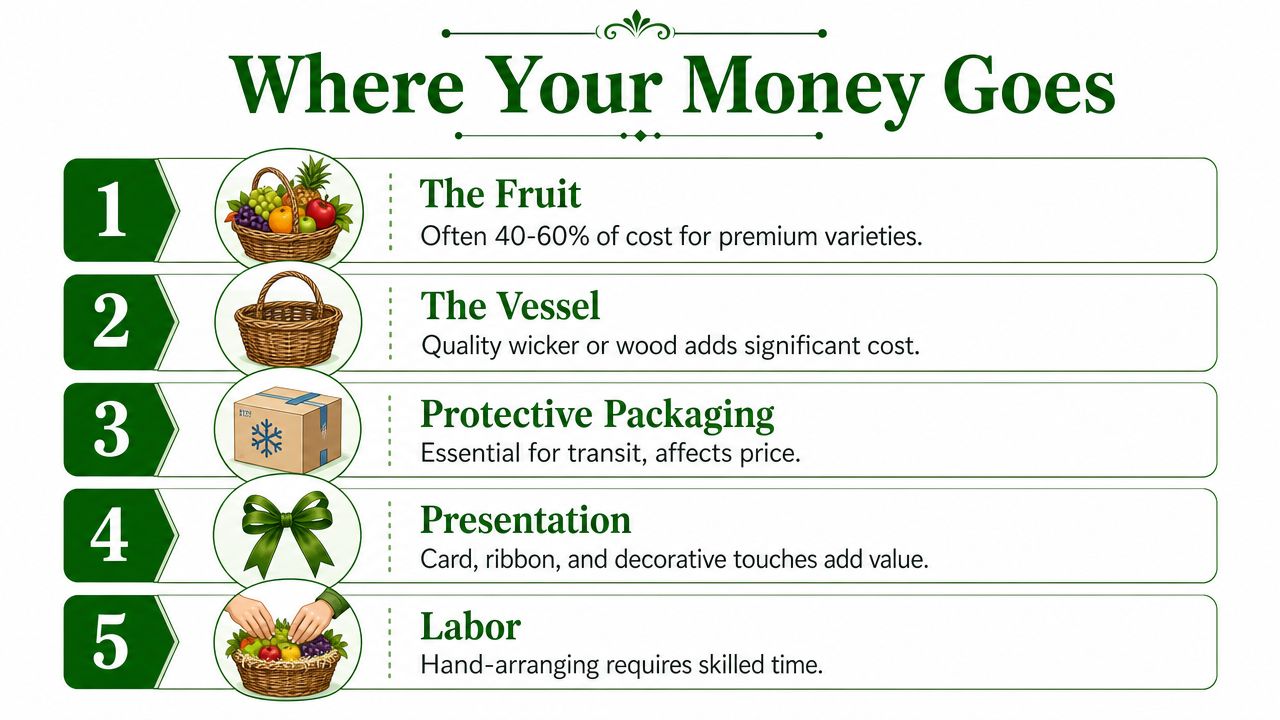
The money in a fruit basket goes into five places, fruit, vessel, protective packaging, presentation, and labor. If a listing is priced high, look for evidence that the seller is paying for quality fruit and transit protection, not just a fancier ribbon. A polished card and reusable basket can justify some premium. Extra glitter and decorative filler usually can’t.
What’s worth paying for
Pay for faster shipping when the basket contains fresh fruit. Pay for stronger packaging when the delivery is going far or the weather is warm. Pay for a reusable basket if the recipient will keep it. Those are real upgrades.
Worth the extra spend: better fruit, stronger packing, a clear gift note, and expedited delivery for perishables.
What usually isn’t worth much
Printed ribbon sounds nice, but it rarely changes the experience. Same with oversized decorative filler, unless the basket is underfilled and trying to hide it. Custom message inserts are useful when the vendor prints them cleanly and legibly, but they shouldn’t replace a handwritten note if you’re sending the gift personally.
If you’re choosing between two similar baskets, pick the one that gives you the most clarity on ingredients, shipping method, and handling. Fancy presentation can’t rescue weak logistics. The recipient remembers whether the fruit tasted good, not whether the bow matched the tissue paper.
Personalization that lands
Personalization works best when it feels specific, not crowded. A short note, a thoughtful occasion tag, or a calm color palette usually lands better than a basket stuffed with every available add-on. For corporate gifts, restraint reads more professional. For family gifts, warmth matters more than branding.
Delivery Windows, Ordering Timeline, and Care After Arrival
A fruit basket has a shorter fuse than a snack box. That means the ordering timeline should start with the fruit, not with the occasion date. If the basket is perishable, fast shipping isn’t a luxury, it’s the whole point.
Timing that actually works
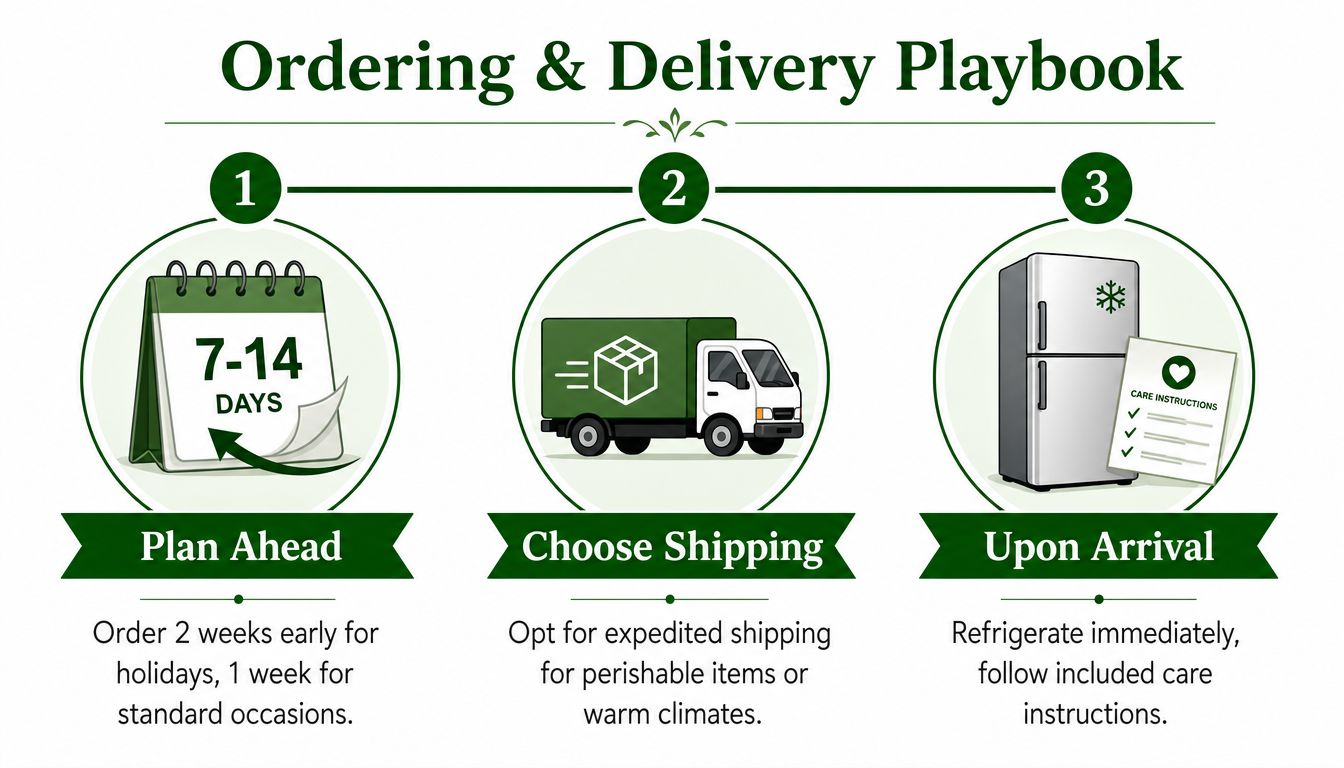
For holidays and high-volume dates, order early so the vendor can hold the right fruit and avoid last-minute substitutions. For standard occasions, a shorter lead time is fine if you choose expedited shipping and the recipient will be available to receive it. Same-day and next-day orders are fine for local or well-packed shipments, but they’re a bad idea if the weather is hot, the address is uncertain, or the gift contains highly perishable pieces.
Mixed fruit can last about 1 to 2 weeks at room temperature or 2 to 3 weeks refrigerated depending on the mix, with berries, grapes, and cut melons needing the fridge, according to Swerseys’ fruit basket guide. That’s why the note inside the basket matters. The recipient shouldn’t have to guess what belongs on the counter and what needs cooling.
What the recipient should do first
- Open the basket right away: Trapped heat shortens freshness.
- Separate delicate fruit: Berries and cut melons should go into the fridge.
- Leave firmer fruit out briefly: Apples and pears can often sit out first if they’re meant to ripen a bit.
- Use the card as a guide: Good vendors should include handling notes.
Refrigerate the fragile pieces first, then let the firmer fruit breathe. That one habit saves more baskets than fancy packaging ever will.
If you’re buying for a warm-weather delivery, choose a format with stronger transit protection or switch to a shelf-stable option. Fruit doesn’t care how nice the card is if it sits in heat too long.
When a Fruit Basket Is Not the Best Gift
A fruit basket can be the wrong move even when it looks thoughtful on paper. Long sympathy deliveries, office gifts with allergen policies, and recipients with dietary restrictions are all situations where perishables create extra work. Add summer heat or an uncertain delivery window, and the risk goes up again.
For corporate gifting, I’d lean toward a shelf-stable gourmet basket unless the vendor can guarantee fast shipping, clear labeling, and good packing. That’s not me being picky. It’s me respecting that offices have shared spaces, shared fridges, and people with very different food rules. A mixed basket with labeled ingredients is safer than a pure fruit basket when you don’t know who will open it.
Chocolate or snack baskets often win for remote sympathy gestures too, especially when the household is busy and not looking after produce. Fruit can feel healthy, but healthy doesn’t help if it arrives bruised or sits untouched on the counter. In those cases, a shelf-stable basket creates less friction and more actual use.
The broader buying lesson is simple. Fruit baskets are a good gift when they can be received, unpacked, and eaten on a reasonable schedule. If any of those pieces breaks, pick something sturdier.
Smart Next Steps and Common Buyer Questions
If you’re still deciding, start with the occasion, then move to the delivery reality. Ask whether the recipient can refrigerate part of the basket, whether the gift needs to travel far, and whether a fruit format fits the setting. If the answers are messy, pick a snack, chocolate, or mixed gourmet basket instead.
How far ahead should I order? For time-sensitive occasions, order earlier than you think you need to, especially for perishables.
Do fruit baskets ship nationwide? Many do, but nationwide shipping doesn’t guarantee great arrival quality. The packing and transit time matter more than the map.
What if the fruit arrives damaged? Document it immediately with photos and contact the seller right away.
Fruit basket or chocolate basket for a corporate client? Chocolate or a mixed gourmet basket is usually safer unless you know the office can handle fresh fruit properly.
For discovery, Kudosz organizes occasion-based gift baskets from selected merchants, so it’s a practical place to compare fruit against other formats before you buy. If you want the fast answer, shop the category that matches the moment, not just the prettiest basket on the page.
If you need a fruit basket today, use the checklist above and buy only from sellers that show dimensions, handling notes, and shipping clarity. If the occasion is corporate, sympathy-heavy, or likely to be delayed, switch to a shelf-stable basket instead of forcing fruit into the wrong job.