A top high-yield savings account was around 4% APY in 2026, while the U.S. national average savings rate was near 0.61% APY, according to Bankrate’s overview of high-yield savings accounts. That gap changes the whole conversation. A savings account isn’t just a parking spot for cash anymore. In the right account, your money can work noticeably harder while staying liquid and protected.
That matters if you’re building an emergency fund, saving for a car repair, setting aside a home down payment, or holding cash you can’t afford to expose to market swings. A high yield savings account won’t make you rich. It can, however, help you stop leaving easy interest on the table.
What Is a High Yield Savings Account
A high yield savings account is a bank savings account that pays a meaningfully higher APY, or annual percentage yield, than a typical savings account. Earlier, we saw how wide that rate gap can be. The practical takeaway is simple. The account serves the same core purpose as any savings account, but it gives your cash a better chance to grow while it sits there.
A common misconception is that “high yield” suggests stock-market-style risk or a complicated product. In reality, you are usually dealing with a standard deposit account at a bank or credit union, with a higher interest payout and the usual rules around transfers, withdrawals, and account access.
A useful way to frame it is by the job your money needs to do.
Money for next month’s rent does not belong in the same place as money for retirement 25 years from now. A high yield savings account works best for cash you want to protect, keep available, and still earn something on. If APY feels abstract, it helps to remember that it is the scorecard for how fast your savings bucket fills over a year, including the effect of interest earning interest. If you want extra practice with that idea, this guide to understanding compounding interest problems can help.
Where a high yield savings account fits best
A high yield savings account is usually a strong fit for:
- Emergency savings that need to stay stable and accessible
- Short-term goals like travel, moving costs, medical bills, or a planned large purchase
- Cash reserves you want to protect while earning more than a basic savings account
It can also work well as a “waiting room” for money. Maybe you are building a down payment, setting aside quarterly taxes, or holding cash between major decisions. In those cases, the goal is not maximum growth. The goal is keeping the money ready when you need it, without settling for a near-zero rate.
Why the definition matters
People often stop at the basic definition and miss the decision that matters more. Which account actually fits your plan after the promotional language wears off?
That is the actual next step. A strong high yield savings account is not just the one with the flashiest rate today. It is the one that matches how you use cash, keeps fees and restrictions low, and gives you confidence about details such as access, transfer limits, and deposit insurance.
How These Accounts Generate Higher Returns
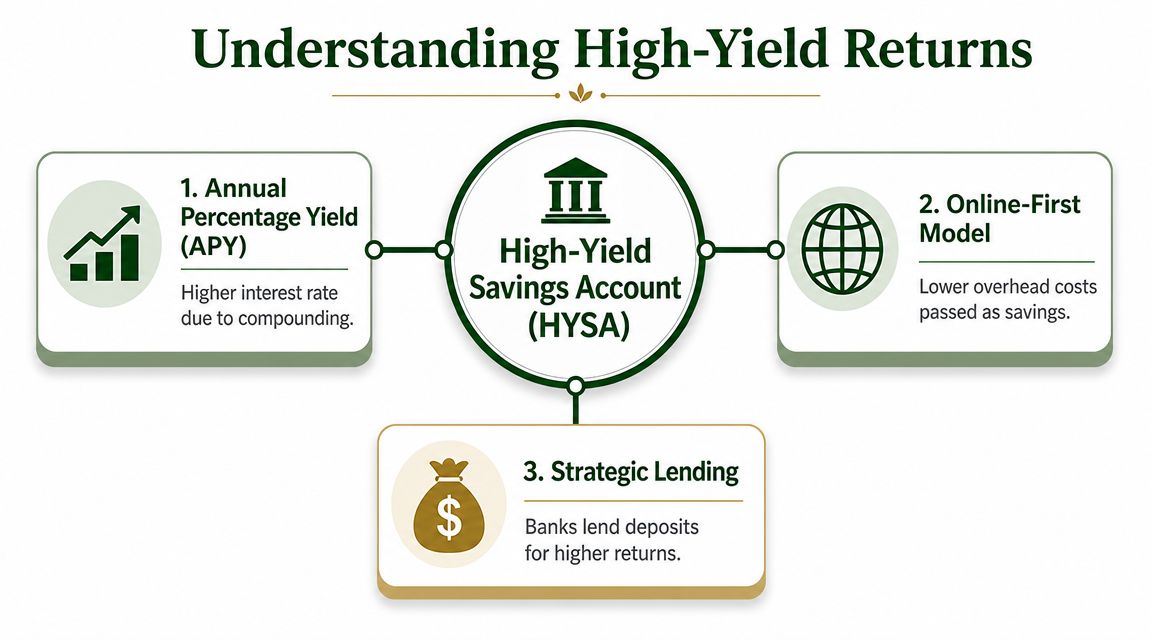
Banks pay you interest because your deposit has value to them. They can use deposited funds as part of their broader banking business, and some institutions are willing to share more of that value with customers through higher APYs. Online-first banks often compete aggressively on rates because they’re built to attract deposits without relying as much on branch traffic.
For you, the key term is APY. It’s the number that captures not only the interest rate but also the effect of compounding. That makes it the best comparison tool when you’re choosing between accounts.
Why APY matters more than the headline rate
Think of APY as the “all-in” version of the return. If two banks both sound competitive, APY helps you compare them on equal footing because it includes compounding.
A small APY difference can matter over time, especially when you keep a large emergency fund or a down payment fund in cash. That’s why comparing APY first, then checking fees and rules, is smarter than reacting to marketing language.
How compounding works
Compounding means your money earns interest, and then that interest starts earning interest too. The snowball analogy works well here. Roll a small snowball downhill and it picks up more snow. Then that bigger snowball picks up even more on the next turn.
At FDIC-insured banks, deposits in these accounts are protected up to $250,000 per depositor, per insured bank, per ownership category, and many accounts compound interest daily, which boosts effective return because each day’s interest can begin earning interest on later days, as explained by PNC’s overview of high-yield savings accounts.
If you want a plain-English walkthrough of the math behind this, these examples on understanding compounding interest problems can help make the idea concrete.
What actually drives the return
Three details usually matter most:
- APY after fees. A strong rate loses value fast if the account charges avoidable maintenance fees.
- Compounding frequency. Daily compounding can slightly improve your effective earnings.
- Low-friction account rules. Minimums, transfer restrictions, and awkward funding rules can reduce the account’s practical value.
Practical rule: Compare the yield you’ll actually keep, not the yield a bank advertises in large type.
Key Benefits and Potential Drawbacks
A high yield savings account solves a specific problem well. You want your cash safe, available, and more productive than it would be in a standard savings account. That’s the upside.
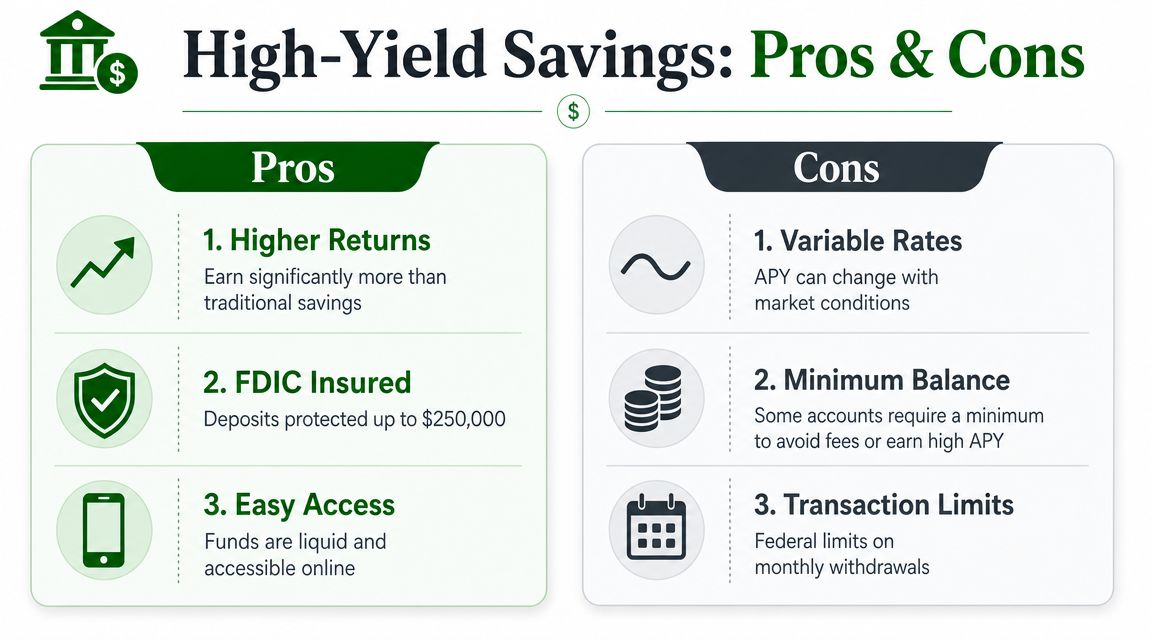
The tradeoff is that these rates aren’t fixed forever. They move with the rate environment, and the best-looking account on a comparison page today may not stay at the top.
The main advantages
Here’s what people usually get right about these accounts:
- Better earnings on cash. You can often earn far more than a traditional savings account without moving into market-based investments.
- Strong safety profile. Rates may change, but the deposit itself remains a bank deposit rather than a risky asset.
- Flexible access. Unlike a CD, you typically don’t face an early-withdrawal penalty for taking your money back out.
These strengths make high yield savings especially useful for emergency funds and money you may need on short notice.
The main drawbacks
The downsides are real, but manageable once you understand them.
HYSA rates are variable and usually move with the Federal Reserve’s policy cycle. They can change at any time, though banks are unlikely to slash them “on a whim,” and balances remain federally insured for at least $250,000, according to Experian’s explanation of how often high-yield savings rates change.
That means you should expect movement. If rates fall, your account may still be useful. It just won’t be as rewarding as it was during a higher-rate period.
A few practical annoyances also come up:
- Online-first service. Some people miss branch access.
- Minimums or fee rules. Not every account is no-hassle.
- Transfer timing. Moving money between banks may take time, which matters in a real emergency.
If you need guaranteed access at a local branch, the very highest online APY may not be worth the inconvenience.
How to Compare High Yield Savings Offers
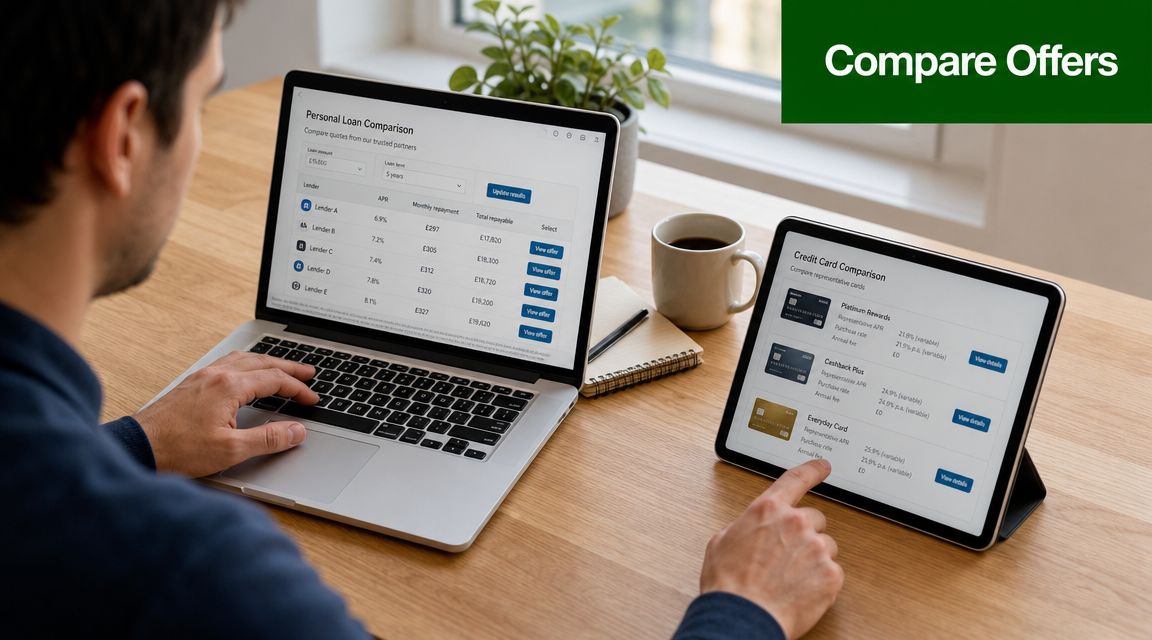
Comparing accounts gets easier when you stop asking, “Which one has the highest number today?” and start asking, “Which one will still feel good to use in six months?”
That’s important because savings rates move around. Historical data shows how rate-sensitive these products are. As of May 9, 2026, the national average one-year CD yield was 1.96% APY, according to NerdWallet’s deposit rate comparison. That kind of variation is your reminder to compare current offers carefully instead of assuming one bank stays best forever.
Start with the four checks that matter most
Use this checklist before you apply:
APY and whether it looks stable
A flashy promotional rate can be fine, but read the account terms. You want to know whether the APY applies broadly or only under narrow conditions.Fees and minimum balance rules
Some accounts look attractive until you notice a maintenance fee, a required opening deposit, or a balance threshold to earn the advertised rate.Transfer speed and access
Check how you’ll move money in and out. A great account can become annoying if transfers are slow or external linking is clunky.Customer experience
Look at the bank’s app, website, alerts, statements, and support options. If your emergency fund will be stored at this location, convenience matters.
Compare beyond the bank’s homepage
A bank’s promotional page usually highlights the best part of the offer, not the most annoying part. That’s why it helps to compare institutions side by side and look at broader banking context too. If you want a wider view of providers in this category, this comparison of banking and personal finance firms is one way to see how different firms position their saving products.
A simple decision lens
Ask yourself three questions:
- Will I keep enough cash here to benefit from the rate?
- Can I access the money in a way that fits my life?
- Are the account rules simple enough that I won’t make avoidable mistakes?
If the answer is yes to all three, you’re probably looking at a workable option. The “best” account on paper isn’t always the best account for your habits.
Opening Your First High Yield Account Step by Step
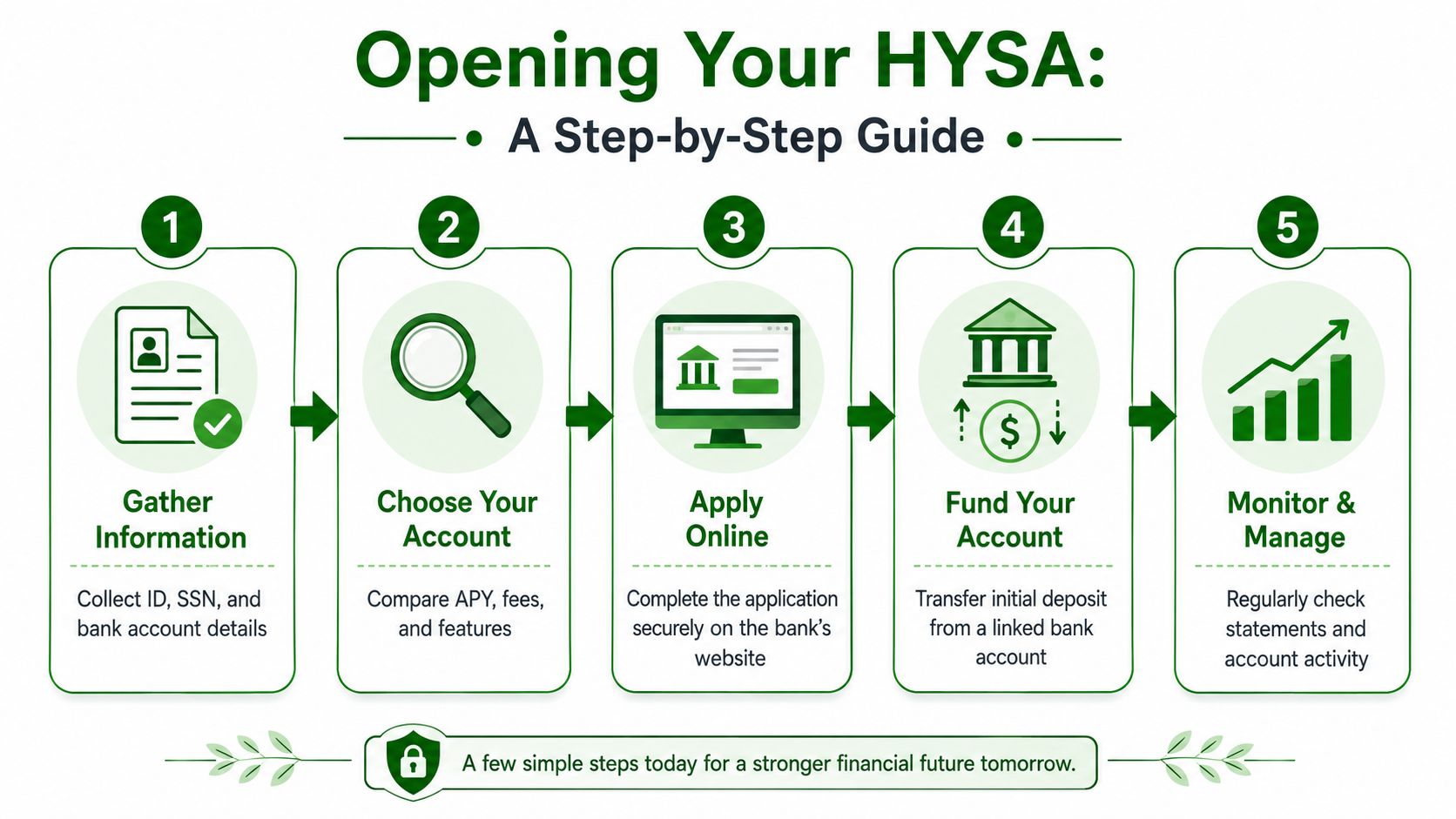
Opening a high yield savings account is usually straightforward. Most banks let you do it online, and the process feels a lot like opening any other bank account.
This quick visual shows the overall flow.
Gather your details first
Before you start, have a few basics ready:
- Personal identification such as your legal name, address, and date of birth
- Tax identification information such as your Social Security number
- A linked bank account if you plan to fund the new account by transfer
- Contact details including email and phone number for security steps
Banks use this information to verify who you are and to comply with identity-check requirements.
Complete the application
Most online applications ask for your personal details, your employment or tax information, and your funding method. Some banks also ask whether you want to open an individual or joint account.
Go slowly on this part. A mistyped number can delay approval or cause trouble when linking your external checking account.
A short video can help if you want to see the setup process in action.
Verify and fund the account
After you submit the application, the bank may verify your identity instantly or ask for a follow-up step. Once approved, you’ll usually fund the account through an electronic transfer from another bank.
A few habits make the launch smoother:
- Start with a test amount if you’re linking a new external bank and want to confirm everything works.
- Turn on alerts so you’ll notice deposits, withdrawals, and login activity.
- Name the account by goal if the app allows labels. “Emergency Fund” or “Home Repair” is more motivating than “Savings 2.”
Opening the account is the easy part. The win comes from using it consistently after the first deposit.
Alternatives and Important Financial Considerations
A high yield savings account is strong for liquid cash, but it isn’t the only place to keep short-term money. In the U.S., top HYSA rates were still around 4% APY in May 2026, while the gap versus traditional savings remained unusually wide, which is why consumers often compare them with money market funds or Treasury bills, as discussed in First Federal Bank’s guide to what to look for in a high-yield savings account.
The better question isn’t “Is a HYSA good?” It’s “Is a HYSA the right cash tool for this specific job?”
Cash Savings Options at a Glance
| Feature | High-Yield Savings Account | Traditional Savings Account | Certificate of Deposit (CD) | Money Market Account |
|---|---|---|---|---|
| Primary purpose | Earning more on liquid cash | Basic savings storage | Locking funds for a set term | Saving with possible extra access features |
| Rate structure | Variable | Usually lower and variable | Usually fixed for the term | Variable |
| Access to funds | High | High | Lower, because early withdrawal can trigger penalties | Usually high |
| Best use case | Emergency fund, sinking funds, near-term goals | Convenience banking at your main bank | Money you know you won’t need until later | Cash reserves for people who want savings-like access |
| Main tradeoff | Rate can fall | Lower earnings | Less flexibility | Terms and features vary by institution |
When another option may fit better
A CD can make sense when you know you won’t need the cash for a while and you value a fixed return over flexibility. A money market account may appeal if you want savings plus account features your bank bundles differently.
Treasury bills and brokerage cash products also enter the conversation for some savers. They can be sensible for people comfortable managing cash outside a standard bank deposit account.
If you’re also evaluating non-bank yield options, this guide to stablecoin yield is useful as a contrast case because it highlights how “yield” can mean very different risk, access, and protection profiles depending on the product. It’s not the same category as insured bank savings, and that distinction matters.
Two rules people often overlook
First, interest earned in a savings account is generally taxable income. A strong APY is still good news, but the amount you keep depends partly on your tax situation.
Second, insurance limits matter if you hold a large cash balance. The structure of the account, the institution holding the deposits, and the ownership category all affect how much protection applies. That isn’t a reason to avoid HYSAs. It’s a reason to organize larger cash holdings carefully.
Practical Tips to Maximize Your Returns
The smartest use of a high yield savings account is to match it to a specific goal. Vague savings tends to get spent. Labeled savings tends to stay put.
Make the account part of a system
A few practical habits can improve your results:
- Automate transfers from checking so saving happens without monthly willpower.
- Separate goals by opening distinct savings buckets if your bank supports that structure.
- Review the APY periodically rather than obsessing over daily rankings.
Avoid the trap of constant rate-chasing
It’s easy to waste time moving money every time a bank posts a slightly better APY. Sometimes that’s worth it. Often it isn’t.
What matters most is your net experience: a competitive rate, low fees, easy transfers, and reliable access. If your current account remains solid across those areas, a tiny APY edge elsewhere may not justify the hassle.
A practical setup looks like this: keep your emergency fund in one high yield savings account, automate recurring transfers for upcoming expenses, and check account terms from time to time. That’s boring, and boring is often what works best in cash management.
Frequently Asked Questions
How is an HYSA at a fintech app different from one at a bank?
The key question is who holds your money.
Some apps offer a savings experience, but the deposit may sit at a partner bank behind the scenes. That can be fine. You just need to confirm the name of the bank, the type of account, and how insurance applies. If those details are hard to find, treat that as a warning sign. A savings app should make the custody and insurance structure easy to verify.
If two accounts have similar APYs, how do I choose?
Use APY as the starting point, not the whole decision.
A good tiebreaker is convenience. Check transfer times, mobile app quality, customer support, minimum balance rules, and whether the bank makes it easy to link your checking account. Two accounts can look nearly identical on a rate table but feel very different once you start moving money in and out. The better account is often the one you will keep and use.
What should I check before trusting a promotional rate?
Look for the fine print that explains how long the rate lasts and what conditions apply.
Some offers are temporary. Others require a minimum balance, direct deposit, or new-money deposit. APY works like a posted speed limit. It tells you the rate under stated conditions, but you still need to read the signs around it to know how the account really works.
What should I do if I need to save more than the insured limit?
At that point, the question becomes account structure, not just account choice.
Standard FDIC coverage is $250,000 per depositor, per bank, per ownership category, as explained in Hancock Whitney’s discussion of HYSA pros, cons, and insurance structure. If your cash balance is higher, you may want to spread funds across different institutions or ownership categories. The goal is simple: keep large cash reserves organized so the protection matches the amount you are holding.
Can a high yield savings account work for sinking funds, not just an emergency fund?
Yes, and that is often one of the most practical uses.
A sinking fund is money you are setting aside for a known expense, such as annual insurance premiums, holiday spending, or a home repair. An HYSA works well here because the money stays separate from daily spending while still earning interest. It is a parking spot for planned cash, not just surprise expenses.
When should I choose a money market account or Treasury bills instead?
Choose based on how you plan to use the cash.
If you want bank-style access and simple savings features, an HYSA usually fits. If you want check-writing or debit access, a money market account may be worth comparing. If you know you will not need the money for a set period and you want to look beyond bank products, Treasury bills may offer a better match. The best option depends less on chasing the top number and more on how soon you may need the money.
How often should I reassess my account?
A few times a year is enough for most savers.
You are not managing a stock portfolio here. Recheck your account if the rate becomes clearly uncompetitive, the bank adds fees, transfers become slow, or customer service turns into a headache. A strong HYSA should fit your plan with very little maintenance.
A high yield savings account does its job best when it supports a specific purpose, fits how you move money, and stays easy to manage over time.
* Disclaimer: Kudosz is not a financial advisor and our Top 5 Best-Rated ratings are not financial advice. This information is for educational purposes only and does not constitute financial advice. Doing business with any providers noted is at your own risk.