You’re standing in the kitchen the night before a birthday, holding an empty tote and trying to make a hard $25 limit feel generous. Your last basket looked less like a thoughtful gift and more like a clearance haul, even though you spent nearly the same amount.
The problem usually isn’t the price. It’s the spend mix. Too much money disappears into filler, cellophane, ribbon, and a basket the recipient may never use. The better approach is simple: choose the container first, keep filler light, and put most of the budget into a small group of useful, coordinated items.
The Real Reason Cheap Gift Baskets Often Look Cheap
A low-cost basket looks cheap when the arrangement announces the packaging before it shows the gift. Shredded paper spills over the edges, cellophane reflects the light, and three small products sit in a hollow center. The recipient sees empty space first and the actual thoughtfulness second.
That happens because many people build outward instead of inward. They buy a wicker basket, add decorative filler, wrap the whole thing, and then spend whatever remains on contents. The result is a container full of air and paper with a few token items sunk in the middle.
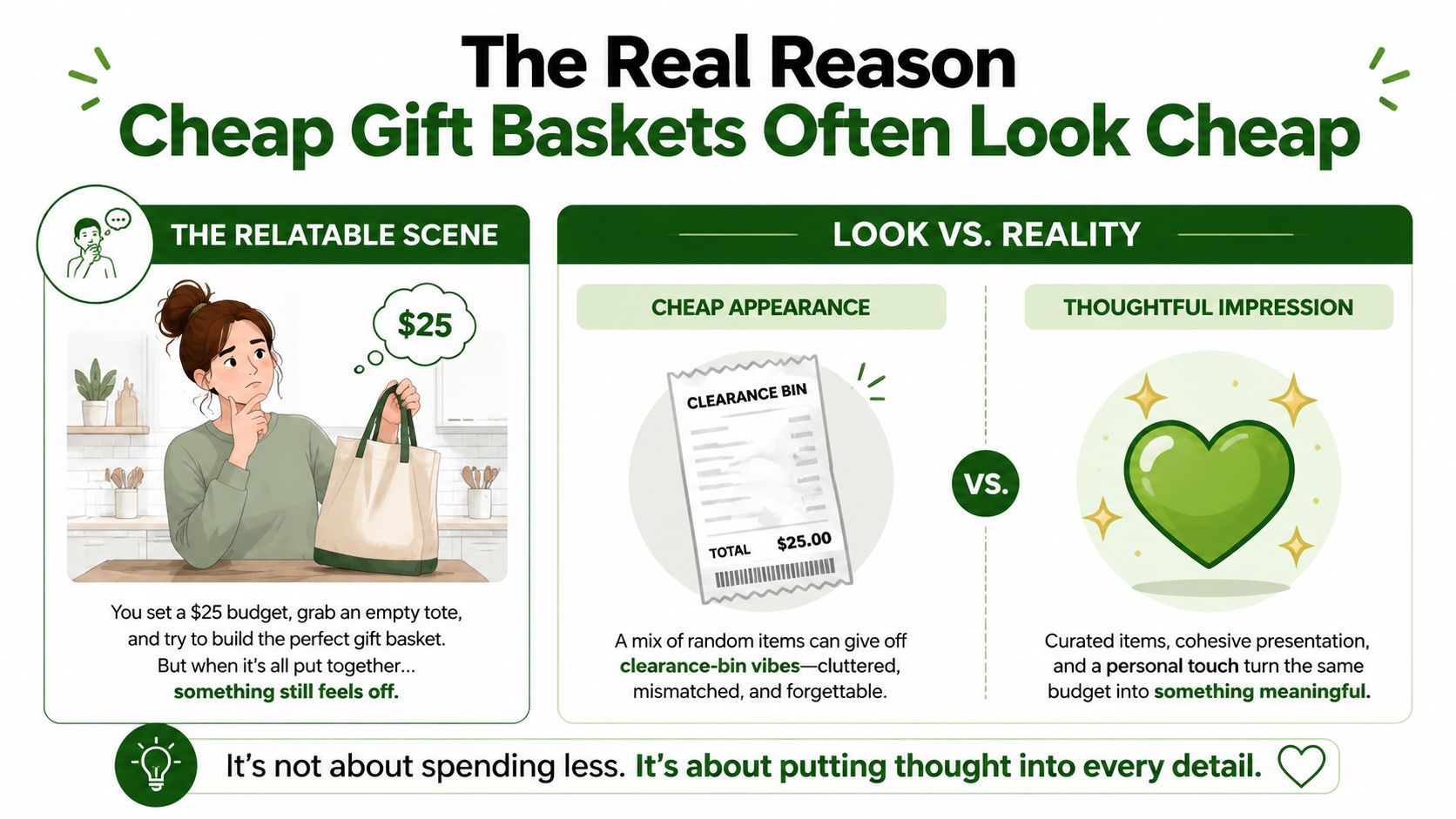
The price isn’t the visual problem
A modest basket can feel polished when every part has a job. A sturdy tote can become part of the present. A folded dish towel can add height and remain useful. A handwritten note can explain the theme better than an oversized bow.
The history of hamper giving helps explain why this format feels familiar across occasions. One historical account traces the practice to England in the 11th century, when William the Conqueror is believed to have introduced wicker hampers containing food and clothing for people in need. By the Victorian era, hampers had become gifts for friends and household staff, particularly at Christmas, as described in this history of hamper gifting.
Practical rule: If the recipient can use the container and the contents, the basket feels intentional before you add any decoration.
The rest of the strategy is a rebalancing act. Spend less on materials that get discarded, use the container to create structure, and select a few items that clearly belong together. A $25 gift won’t become a $50 purchase, but it can read as far more valuable because the proportions make sense.
Where Your Money Actually Goes in a Budget Basket
Take a typical $25 basket and write down the line items before shopping. Many people unknowingly spend about $6 on a wicker basket, $8 on cellophane and filler paper, and $4 on ribbon. That leaves only $7 for the items the recipient eats, uses, or remembers.
The split is backwards. Packaging and filler consume 18 of the $25, while the contents receive only $7. Even without calculating exact percentages, the visual consequence is obvious: the basket has expensive presentation materials surrounding inexpensive products.
A rebalanced version treats the container as one of the gifts. Use a repurposed container valued at about $4, spend about $1 on minimal filler, skip cellophane, and reserve about $20 for coordinated contents.
| Line Item | Typical Allocation | Rebalanced Allocation |
|---|---|---|
| Container | $6 wicker basket | $4 repurposed container |
| Filler | Included with packaging spend | $1 minimal filler |
| Cellophane | Part of $8 packaging spend | $0 |
| Ribbon | $4 | Included as a simple finishing detail |
| Contents | $7 | $20 |
| Total | $25 | $25 |
These figures are a planning example, not a universal shopping rule. Use the same method with your own limit. Write the total budget at the top, assign a small amount to structure, and protect the largest share for the contents. If the basket starts looking sparse, add a useful item rather than more paper.
Find the leak before you shop
The easiest savings often come from shopping your home first. A clean tote, mixing bowl, lidded storage box, mug, tin, or unused serving dish can replace the separate basket purchase. For product sourcing ideas and ways to think about finding suitable items, the Aroma Warehouse sourcing guide offers useful context beyond grabbing the first available package.
A packaging study found that willingness to reuse depends strongly on the material and format of the packaging, not only on what the package contains, as discussed in this research on packaging reuse behavior. That’s why a tote or bowl often works better than a flimsy decorative vessel. The recipient can immediately see how to use it again.
Choosing a Container That Doubles as Part of the Gift
Start with the container, not the shopping list. Its shape determines how many items will fit, how tall the finished arrangement can be, and whether you’ll need filler to stop everything from collapsing.
A container earns its place when it has a second life after the gift is opened. That approach also aligns with packaging guidance that emphasizes reuse, recyclable choices, and formats people find convenient to keep.
Match the vessel to the theme
Wooden cutting board: Lay it flat, arrange cheese, crackers, preserves, or a small knife on top, then use parchment or a reusable cloth instead of a deep basket. It can cost nothing if it’s already in your kitchen, and it signals a casual food-focused gift.
Vintage metal mixing bowl: Use it for a baking theme with cupcake mix, sprinkles, a spatula, and a handwritten recipe. A thrifted bowl creates a stronger visual identity than a generic wicker basket.
Sturdy fabric tote: Fill it with coffee, tea, a mug, a notebook, or self-care products. The tote becomes useful for errands, work, or travel, so it communicates practicality rather than disposable decoration.
Small galvanized pail: This suits a children’s art kit with washable markers, a sketchbook, stickers, and a small craft item. The pail gives the contents a clear shape and can later hold supplies.
Clean paperboard box: A takeout-style box works for movie night when lined with tissue and filled with popcorn, candy, and a note. Choose a clean, sturdy box and let the contents provide the color.
Thrifted ceramic bowl: Spa items, bath salts, hand cream, and a soft cloth look natural inside a bowl the recipient can later use on a vanity or bedside table.
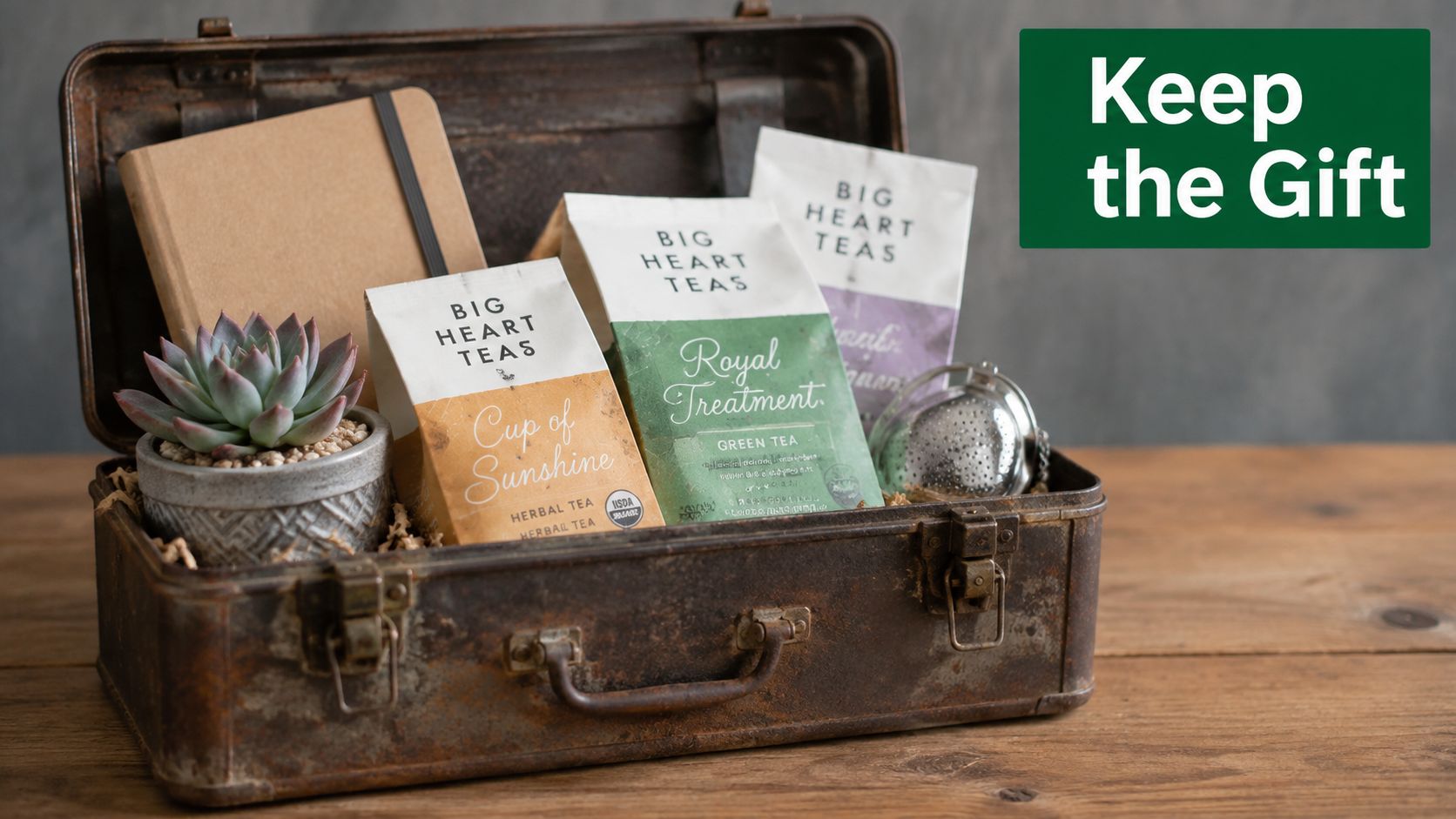
The exact cost will depend on what you already own and what you find locally. The important test is functional fit. A baking dish makes sense for a baker, while a storage bin suits a student or new parent.
Skip the cellophane when the container already looks attractive. A clean arrangement inside a good tote, bowl, or tin usually looks more deliberate than a beautiful vessel hidden beneath shiny plastic.
Smart Item Picks for Every Occasion
The strongest cheap gift basket ideas begin with a practical theme, not a random collection of small products. Choose one recognizable treat, add useful extras, and remove anything that exists only to occupy space.
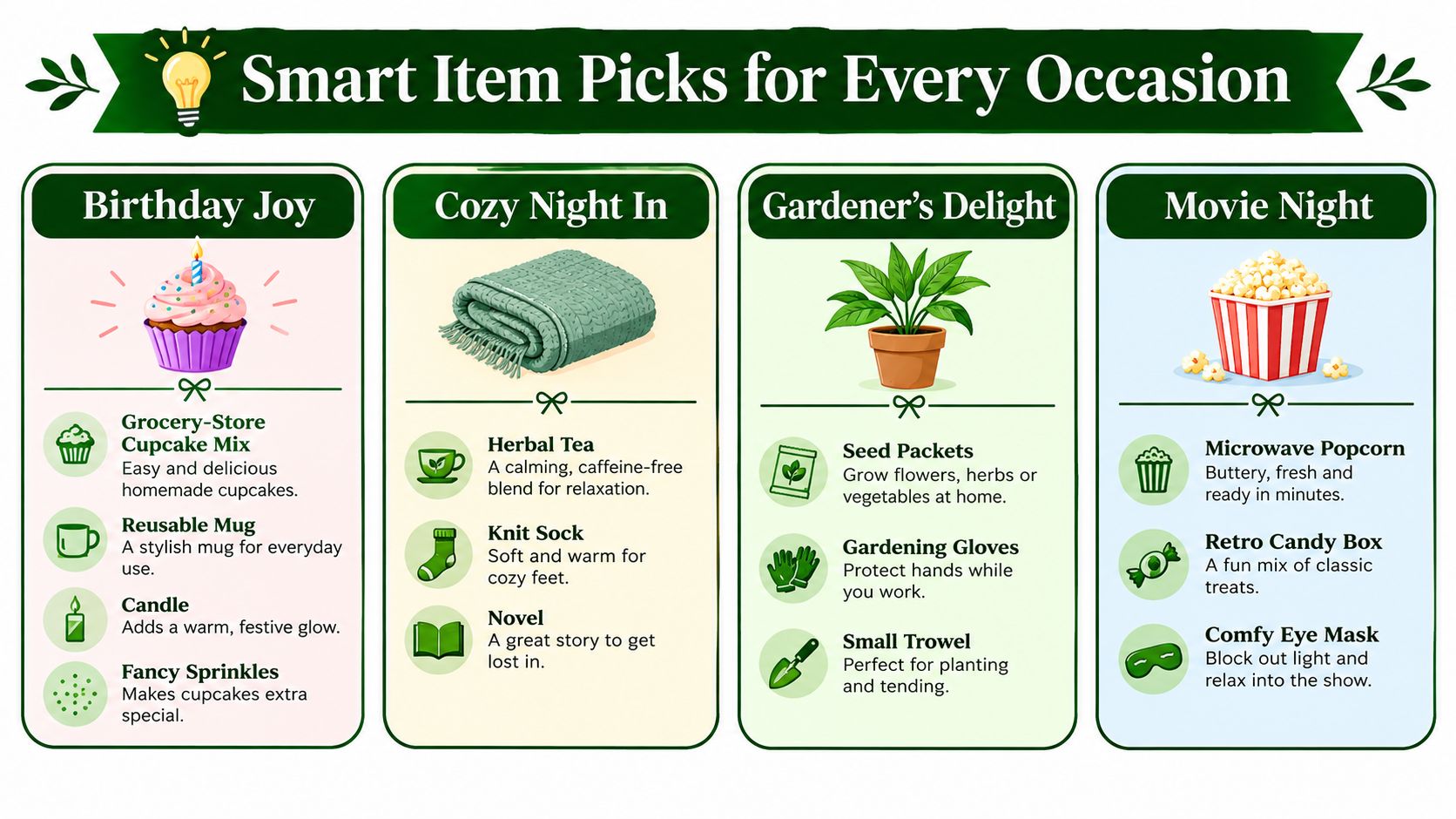
For a birthday, combine grocery-store cupcake mix, a reusable mug, a candle, and fancy sprinkles. The mug gives the arrangement a strong anchor, while the mix and sprinkles create an obvious activity instead of a pile of unrelated snacks.
Build around the recipient’s routine
Cozy night in: Pair herbal tea with a knit sock, a novel, or a small packet of biscuits. Use a fabric tote or a lidded box, and keep the colors quiet rather than mixing every seasonal pattern.
Movie night: Microwave popcorn, a retro candy box, a low-cost streaming gift card, and a soft throw create a complete evening. A discount retailer can supply the throw, while the snacks provide easy visual color.
Gardener’s delight: Seed packets, gardening gloves, and a small trowel fit inside a galvanized pail or a reusable tote. Add a plant marker made from a craft stick if you have one at home.
New neighbor welcome: Pantry pasta, sauce, a tea towel, and a handwritten card feel useful during the first busy days after a move. A colander or small serving bowl can replace the basket.
Student care package: Instant noodles, granola bars, highlighters, and microwave popcorn offer both food and supplies. A compact storage bin gives the recipient a place to keep study items.
Hostess thank-you: Preserves, crackers, hand soap, and a small plant create a balanced mix of edible and lasting items. A thrifted ceramic bowl or cutting board makes the presentation feel connected to entertaining.
Shop grocery clearance sections, discount stores, pharmacies, and seasonal aisles before buying specialty packaging. Use a name-brand product only when it serves as the visual centerpiece, such as a recognizable chocolate bar, tea tin, or candle.
For more ideas on balancing sweet, savory, and novelty snacks, this snacks care package guide can help you develop a tighter theme. For graduation-specific arrangements, browse these graduation gift basket ideas and adapt the structure with items from local stores.
Packing Tricks That Make a Small Haul Look Generous
Packing is where a small collection either becomes a composition or turns into a heap. Use the container’s shape as your guide, then arrange for visibility instead of trying to make the basket look stuffed.
Put the tallest or most distinctive item at the back. A notebook, mug, tea tin, or bottle creates a visual spine. Place medium products in the center and smaller items toward the front, where the recipient can see them immediately.
Create height with useful materials
A folded dish towel, rolled kitchen towel, or crumpled tissue can raise an item without requiring a thick layer of shredded paper. Use only enough support to stop products from tipping. The packaging cost-benefit analysis from the European Commission supports the broader principle of reducing secondary material and avoiding unnecessary packaging in applicable systems.
Angle jars and boxes so labels face forward. Stack products against one another instead of leaving isolated gaps between every object. If the arrangement still has empty side spaces, use lightweight useful items such as socks, napkins, tea towels, or snack packets rather than loose filler.
A single large cellophane sheet can work when you need protection during transport, but it shouldn’t become the dominant feature. Pull it taut across the top, gather it cleanly, and secure it beneath the container. If the vessel is already attractive and the gift will be hand-delivered, leaving it unwrapped may look more modern and saves both material and time.
Finish with one wide ribbon around the middle and a small bow on top. Then inspect the basket from the recipient’s viewpoint. Every visible object should have a role, and the overall shape should look deliberate rather than merely full.
What Actually Signals Premium on a Tight Budget
Premium presentation comes from restraint. Five coordinated, useful items usually feel more valuable than a crowded container filled with inexpensive extras that don’t relate to one another.
Choose a narrow color palette and repeat it in the ribbon, tissue, card, or labels. Strong packaging, clean containers, aligned products, and an intact presentation signal care before the recipient evaluates the brands.
Edit before you decorate
Oversized bows, mismatched filler, excessive plastic, and random add-ons often make a basket look assembled only to create height. Remove one item and see whether the theme becomes clearer. If it does, that item was never helping.
The recipient remembers the logic of the gift, not the volume of the filler.
Personal details can carry more emotional weight than a costly label. Include a favorite snack, a practical household item, or a note explaining why you chose each product. “For your first movie night in the new apartment” tells a stronger story than a generic gift tag.
The container should also reflect the person’s routine. A baking dish suits a baker, a lidded bin helps a student, and a tote works for someone who carries items to work. When the recipient can use the vessel immediately, the entire arrangement feels more considered.
Spend first on the item they’ll use or enjoy most. Then make the surrounding products support that choice through matching colors, compatible sizes, and clean placement. A cheap basket looks premium when it feels edited, not crowded.
Your Repeatable Assembly Workflow and Final Savings Checklist
A repeatable process prevents last-minute impulse buying. It also keeps the container, contents, and presentation working as one gift instead of three separate purchases.
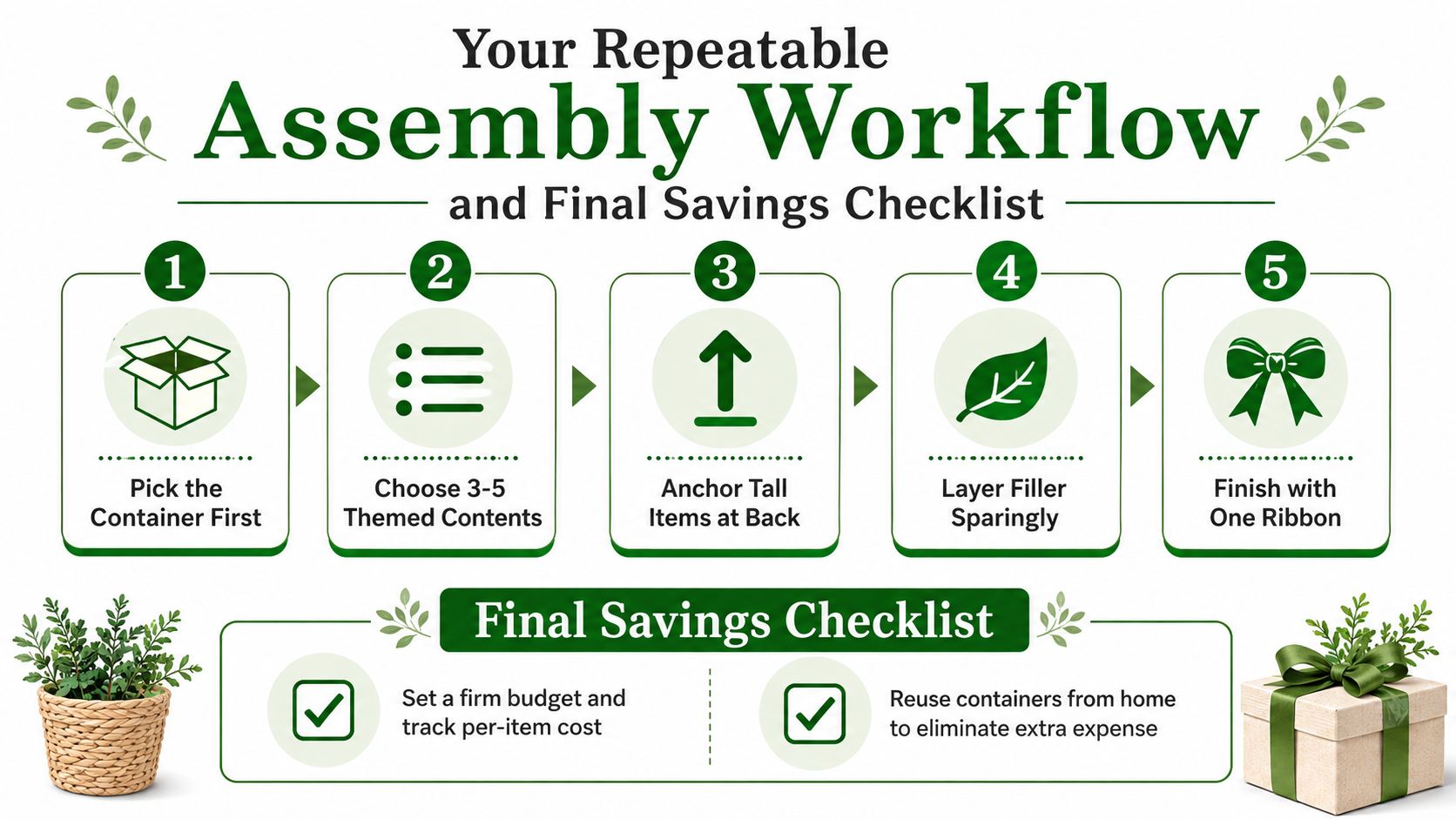
Pick the container first. Search your home for a tote, bowl, tin, cutting board, box, or pail that suits the recipient.
Choose 3 to 5 themed contents. Start with one centerpiece, then add products that support the same activity or occasion.
Anchor tall items at the back. Use the tallest package or most distinctive object to establish the arrangement’s shape.
Layer filler sparingly. Add a towel, tissue, or small amount of paper only where it supports an item or closes an obvious gap.
Finish with one ribbon and a handwritten tag. Keep the products visible and explain the personal reason behind the theme.
Final savings checklist
Set the budget before shopping: Write the limit down and track each item as you buy it. If packaging starts taking more than a small supporting share, stop and rebalance.
Reuse the container: A vessel from home eliminates a separate purchase and gives the recipient something functional to keep.
Buy multipacks strategically: Split tea, coffee, biscuits, or snack packages across several gifts only when the individual portions remain presentable.
Skip decorative excess: Use a towel or tissue you already own instead of buying layers of filler and wrap.
Use the 24-hour rule: Draft the theme and contents list before shopping. Wait before adding impulse items that don’t serve the occasion.
Use this loop for birthdays, holidays, housewarmings, thank-you gifts, and hostess baskets. The savings come from fewer disposable materials, while the stronger impression comes from choosing items that belong together.
Choose one upcoming occasion, set your spending limit, and search your home for a container before buying anything. Then select three to five useful items around a single theme, pack them with minimal filler, and add a handwritten note that makes the gift unmistakably personal.