Navigating your wealth starts with a counterintuitive fact. The U.S. already supports about 326,000 personal financial advisor jobs, and the field is still projected to grow 10% from 2024 to 2034, which the U.S. Bureau of Labor Statistics says is much faster than average for all occupations. Median annual pay was $102,140 in 2024, underscoring that advice has become a large, durable professional market rather than a niche service for the ultra-wealthy alone (BLS personal financial advisors outlook).
That scale creates a problem for consumers. A bigger market doesn’t automatically make choosing easier. It usually means more service tiers, more pricing models, and more marketing that blurs the difference between budgeting help, investment management, and full financial planning.
That’s why the best personal finance firms in 2026 are best only for the right client. Some are built for long-term index investors who want light human guidance. Others suit households that need year-round planning around taxes, cash flow, retirement, and employer benefits. Still others are strongest when a client wants branch access, a national brand, or a dedicated advisor relationship.
If you’re also comparing where to hold assets, this companion guide on how to compare investment platforms is a useful second step.
1. Vanguard Personal Advisor

Vanguard Personal Advisor fits a specific kind of investor very well. It’s strongest for people who already believe low-cost index investing works, don’t want to build and monitor portfolios alone, and still want a human to weigh in on retirement, withdrawals, and major life transitions.
The appeal isn’t just brand familiarity. It’s philosophical alignment. Vanguard’s advisory model wraps planning around broadly diversified portfolios built with Vanguard funds and ETFs, so the service tends to feel coherent rather than layered on top of a product shelf with too many moving parts.
Best for the disciplined delegator
This is a hybrid model in the most practical sense. Clients get automated portfolio management plus access to advisors for goal-based planning, including retirement income, Social Security timing, and withdrawal strategy. That makes it a better fit for the investor who wants guidance without turning every decision into a custom wealth-management engagement.
Practical rule: Choose Vanguard when your core question is, “Can someone help me stay on plan?” rather than, “Can someone build a highly bespoke financial structure around my business, estate, and tax complexity?”
A team-based advisor structure can be a strength or a drawback depending on personality. Some clients like continuity from a large institution and don’t need one named planner forever. Others want a single dedicated relationship and may find the team model less personal.
A few trade-offs stand out:
- Best use case: Long-term retirement savers who prefer indexing and want integrated investment management plus planning.
- Watch for: The need to keep assets within Vanguard’s ecosystem, which isn’t ideal if you prefer scattered custodians or bank-and-broker flexibility.
- Decision filter: If you want a broader framework for judging financial providers, Kudosz’s guide to banking and personal finance firms is a practical companion.
The deeper takeaway is that Vanguard works best when the client’s philosophy already matches the firm’s. That reduces friction, second-guessing, and portfolio tinkering, which is often where households lose discipline.
Visit Vanguard Personal Advisor.
2. Charles Schwab Wealth Advisory and Intelligent Portfolios Premium

Charles Schwab stands out because it doesn’t force one service model on every client. It offers a clearer on-ramp than many competitors: traditional wealth advice for people with more complexity, and a subscription-style planning route through Intelligent Portfolios Premium for people who want structured guidance without going straight into a classic AUM relationship.
That flexibility matters in a market where more consumers are benchmarking firms by minimums, fees, services, and fit. Industry comparison sites such as NerdWallet and Bankrate screen firms on those practical variables rather than reputation alone, which is exactly how Schwab’s layered offering should be evaluated (NerdWallet best financial advisors).
Best for clients who want optionality
Schwab is a strong match for people who value infrastructure. Branch access, cash features, trading tools, and multiple advice tiers create a broad platform for households whose needs may evolve. A younger investor can start with a more digital setup and later move toward more advisor-led service without changing firms.
Schwab is often less about finding the single “best” advisory package and more about reducing switching costs as your life gets more complicated.
The split between Schwab Wealth Advisory and Intelligent Portfolios Premium is useful because it maps to real client behavior.
- Hybrid-minded clients: Intelligent Portfolios Premium suits investors who want automated portfolios and CFP access but don’t need a fully bespoke relationship.
- Traditional advice seekers: Wealth Advisory is better for households that want a dedicated team and more involved guidance.
- Platform-first users: Schwab works well for clients who care about banking, brokerage, and advisory services living under one roof.
The main caution is model design. Intelligent Portfolios typically include a cash allocation, and some investors won’t like that if they want maximum market exposure. On the full-service side, clients should pay close attention to whether they need the extra advice depth enough to justify the cost.
For readers thinking about milestone-driven financial decisions, not just investment products, Kudosz also publishes lighter consumer content such as graduation gift basket ideas, which shows how varied personal-finance-adjacent consumer journeys can be.
Visit Charles Schwab Wealth Advisory.
3. Fidelity Wealth Management
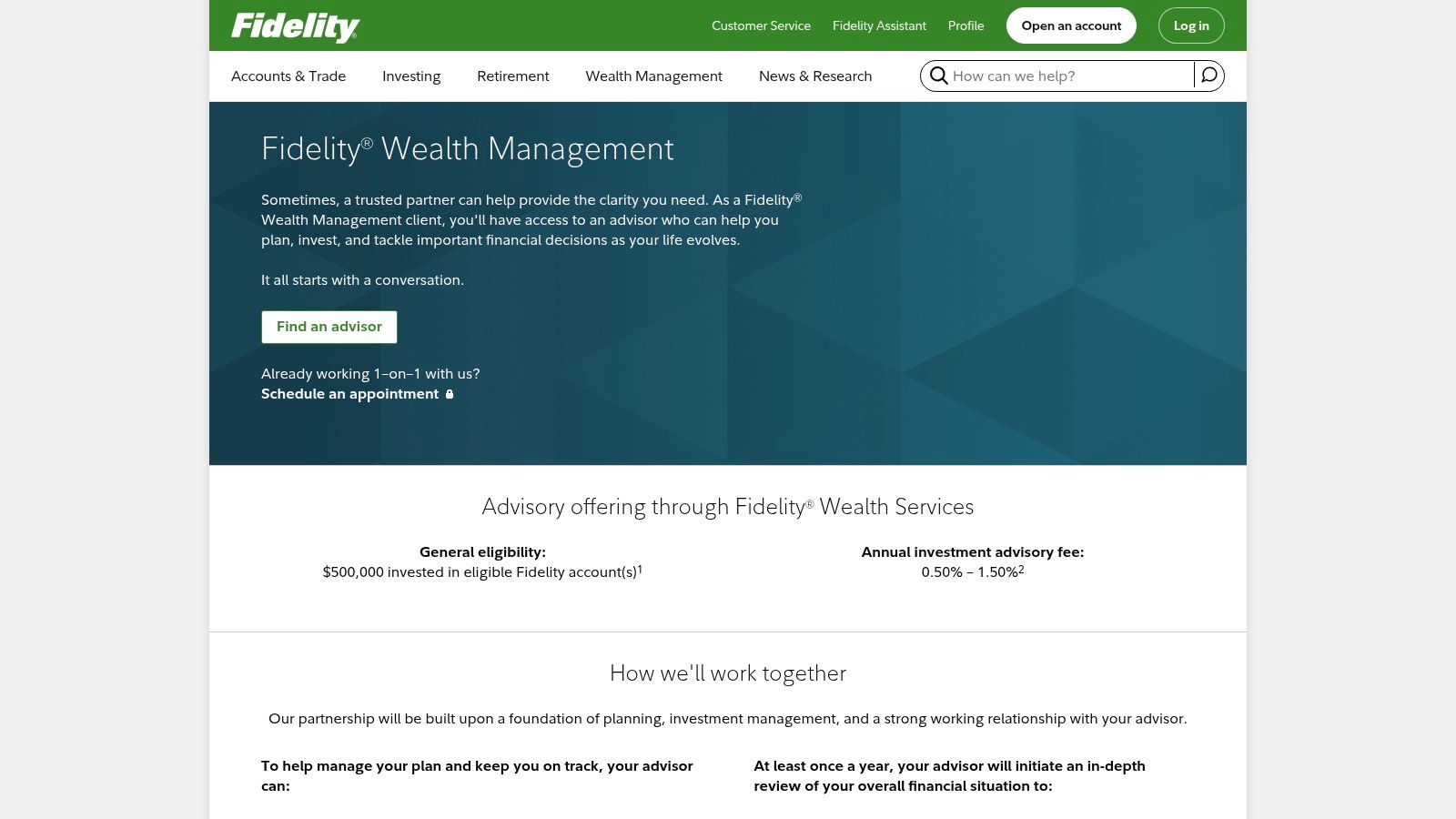
Fidelity is one of the few firms that can credibly serve clients from robo-level simplicity through private wealth complexity without feeling like it stitched those services together after the fact. That range is its main advantage.
The ideal Fidelity client usually wants a national brand, strong service infrastructure, and the ability to move from self-directed investing into deeper planning over time. It also suits households that like integrated cash management, brokerage, research, and advisor access inside one ecosystem.
Best for households growing into complexity
Fidelity Wealth Management becomes especially appealing when a client’s life is more complicated than their portfolio suggests. A household may need help coordinating retirement accounts, taxable investing, estate discussions, and tax-aware implementation before it ever sees itself as “high net worth.”
The firm’s tiered structure matters here. Fidelity Go serves digital-first investors, while Fidelity Advisory Services and Wealth Management add more planning depth, specialist access, and a more direct advisory relationship.
- Why clients choose it: A broad menu from robo to full-service advice.
- Where it shines: Clients who want planning plus extensive internal tools and research.
- What to verify: Whether you qualify for the level of human support you expect, especially if you want a dedicated advisor rather than a service team.
Fidelity’s service breadth also reflects a broader industry reality. The Investment Adviser Association reported that advisers rose to 15,870 in 2024 and clients served increased 6.8% to 68.4 million, reinforcing how firms are being judged on capacity, service model efficiency, and continuity, not just prestige (Investment Adviser Association industry snapshots).
That context helps explain Fidelity’s place on this list. Its character goes beyond being “large.” It’s built for a growing pool of clients who may need to move across advice tiers without restarting the relationship elsewhere.
For a softer consumer-oriented read from the publisher, see Kudosz’s birthday gift basket guide.
Visit Fidelity Wealth Management.
4. Betterment
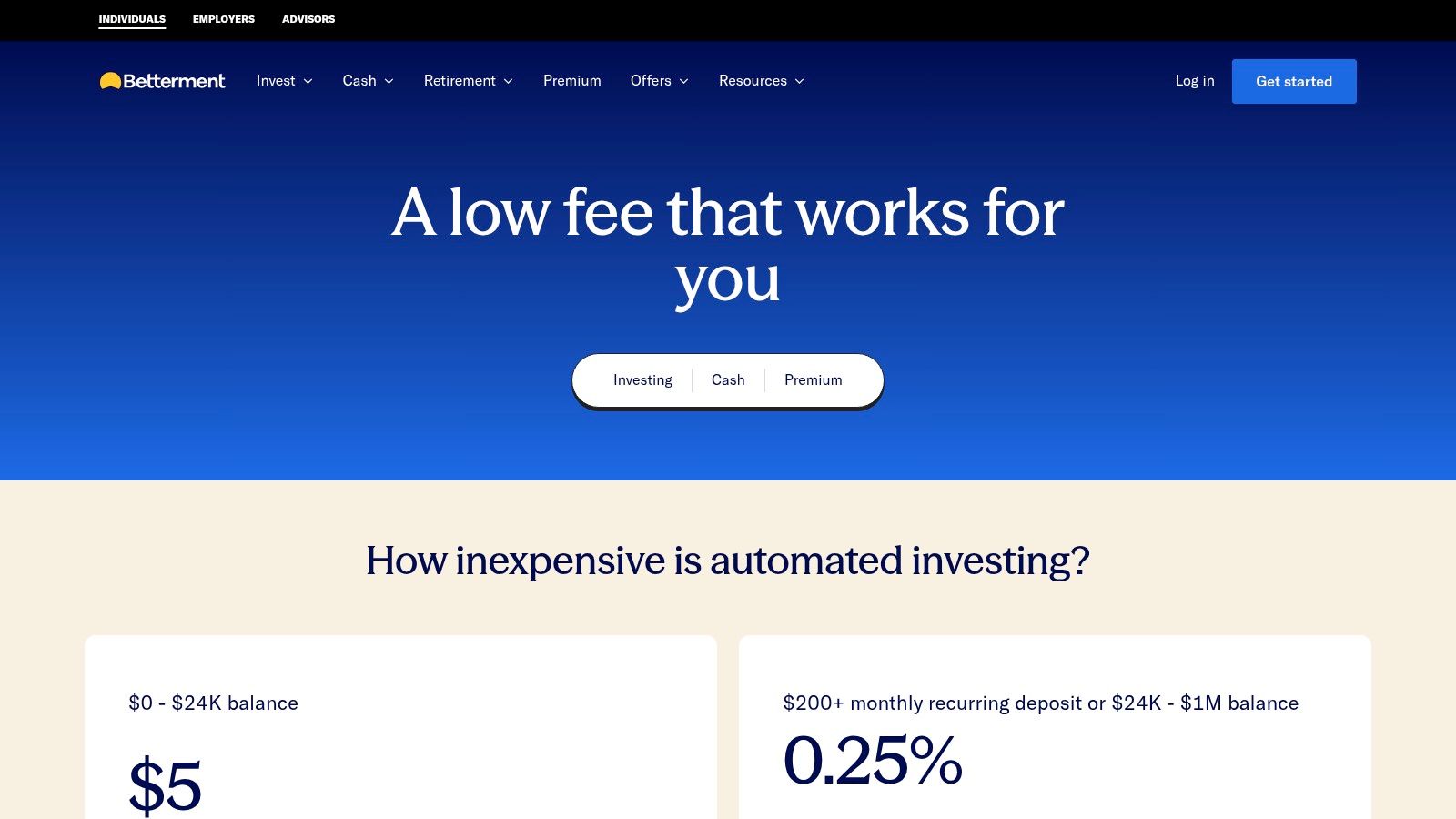
Betterment remains one of the clearest answers for people who don’t need a traditional advisor relationship yet. Its value isn’t that it tries to imitate a private wealth firm. It’s that it doesn’t. The platform keeps the proposition simple: automated investing, goal-based organization, tax features, and a straightforward upgrade path to human advice through Premium.
That makes Betterment one of the best personal finance firms for first-generation accumulators, busy professionals, and couples who want to invest consistently without building a complex advisory stack too early.
Best for the cost-aware optimizer
Betterment works best when your financial life is still structurally simple. You want good habits, smart automation, and enough planning support to stay organized, but you don’t need a planner quarterbacking every tax, estate, and insurance decision.
Its Digital tier is the better fit for clients who mainly need automated portfolios, rebalancing, and tax-aware features. Premium is more compelling when the account size and planning needs justify regular access to CFP professionals.
Betterment is strongest when simplicity is the strategy, not a temporary compromise.
A few distinctions help define the ideal client:
- Good fit: Investors building steadily, with a long horizon and limited appetite for hands-on portfolio management.
- Less ideal: Business owners, executives with complicated stock compensation, or families needing high-touch coordination across multiple advisors.
- Best question to ask yourself: Do you need planning advice, or do you mostly need a system that keeps you investing and organized?
Bankrate’s advisor coverage is useful here because it separates traditional firms from robo-advisors and hybrid options instead of treating them as interchangeable. That distinction matters. Betterment shouldn’t be judged against a full-service wealth manager on concierge planning depth. It should be judged on digital usability, automation, fee clarity, and whether its Premium tier provides enough human guidance for your stage of life (Bankrate best financial advisors).
Visit Betterment pricing and plans.
5. Empower Personal Wealth
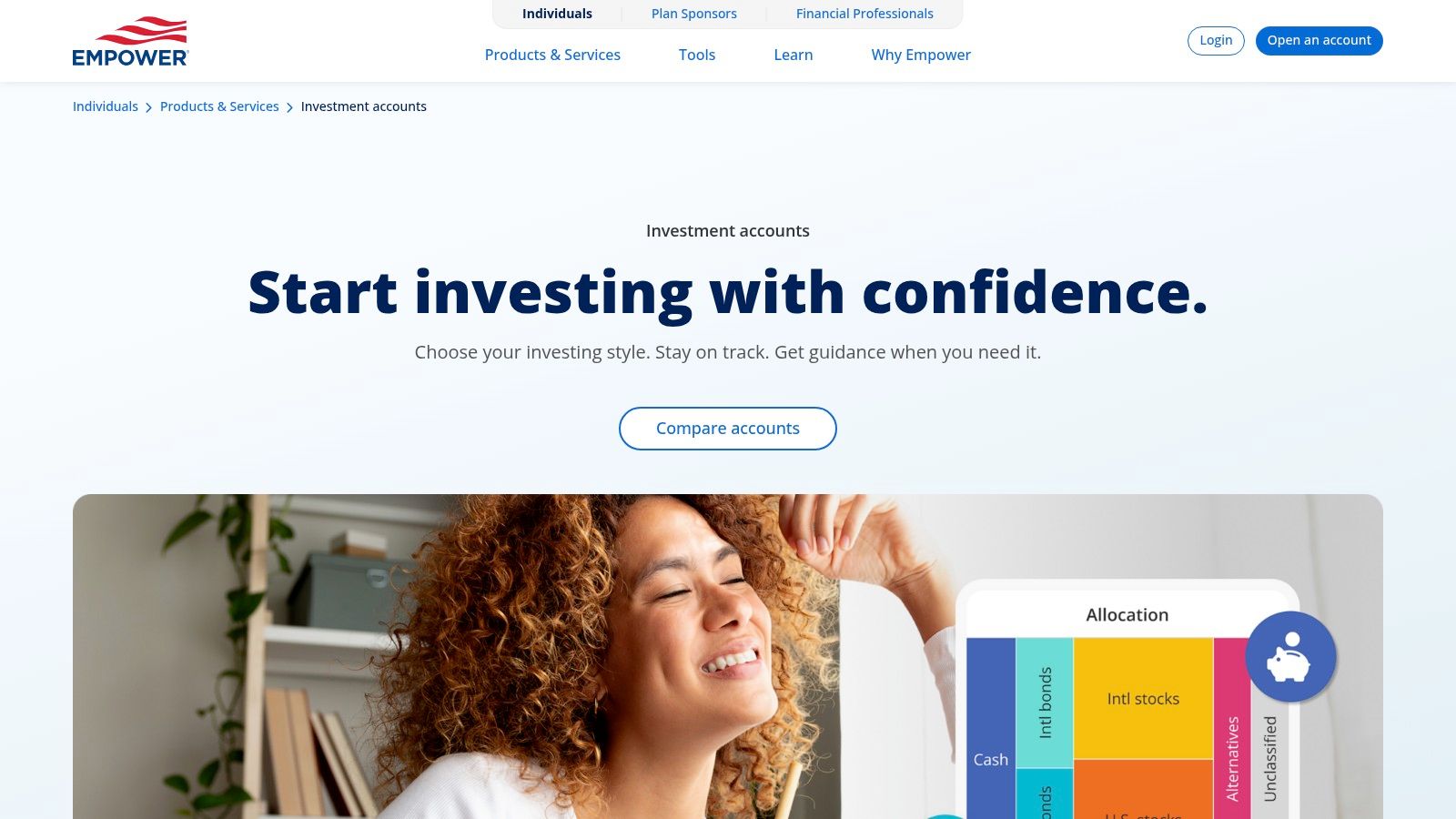
Few advisory firms combine portfolio management with day-to-day financial visibility as effectively as this one. Its appeal starts with a practical advantage many competitors still treat as secondary. Clients can view outside accounts, spending, net worth, and investments in one dashboard while also working with an advisor.
That combination changes the ideal client profile.
This is usually not the best match for someone who only wants a low-cost automated portfolio. It fits better for households whose financial lives have become harder to monitor than to invest. Mid-career professionals, high earners with multiple accounts, and families balancing taxable assets, retirement plans, equity compensation, and cash flow often get more value from a platform that organizes the full picture before the advisor makes recommendations.
Best for clients who want planning tied to a full-balance-sheet view
The firm’s edge is not just human advice. It is the connection between advice and account aggregation. That matters because planning quality often depends on what the advisor can see. A retirement recommendation is more useful when it reflects outside 401(k)s, concentrated holdings, debt, and spending patterns instead of only the assets under direct management.
The strongest fit is the client who sits between pure DIY and traditional full-service wealth management. Spreadsheets have become hard to maintain. A private-bank model would add more service than the household needs. This model serves that middle tier well, especially for people who want ongoing guidance without giving up visibility into their own financial system.
A few traits define the best fit:
- Ideal client: Households with scattered accounts, rising complexity, and a preference for seeing their finances in one place.
- Why the model works: Advisor recommendations can be informed by a broader household balance sheet, not just the managed portfolio.
- Main trade-off: Clients with simple needs may find the advisory layer more involved, and more expensive, than a lighter digital or subscription model.
That distinction is easy to miss in broad rankings. SmartAsset’s state-focused advisor pages show why advisor choice is not only about brand recognition, but also about client context such as location, planning complexity, and the type of relationship a household wants (SmartAsset Illinois top financial advisors).
Viewed that way, the firm stands out less as a prestige pick and more as a workflow fit. If better financial decisions depend on seeing accounts, cash flow, and investments together, its model can make more sense than either a stripped-down robo service or a high-touch full-service advisor.
Visit Empower Personal Wealth.
6. Edelman Financial Engines
Edelman Financial Engines is the retirement-planning specialist on this list. Not because it only serves retirees, but because its national reputation is tied closely to workplace-plan advice, rollover conversations, and broader retirement strategy for households that want planner-led guidance.
That matters more than many shoppers realize. Plenty of people don’t need an advisor to pick funds. They need help turning a 401(k), IRA, Social Security decisions, taxable assets, and spending needs into a workable retirement income plan.
Best for retirement-centered households
If your main financial question starts with “Can we retire?” or “How do we draw income responsibly?”, Edelman Financial Engines deserves attention. Its planning model is broader than portfolio construction alone and often feels most relevant when retirement timing, income sustainability, and tax coordination are front and center.
The firm’s scale as a large independent RIA also helps clients who prefer established processes and a national footprint over boutique intimacy. That’s especially valuable for households that want ongoing advice rather than a one-time planning engagement.
The right retirement advisor isn’t the one with the most impressive brand. It’s the one whose default workflow already matches the questions keeping you up at night.
Edelman stands apart from digital-first platforms and minimalist hybrid services.
- Ideal client profile: Near-retirees, retirees, and workplace-plan participants who want guidance anchored in retirement planning.
- Why it stands out: Advisor-led, holistic planning with clear retirement depth.
- Potential drawback: Smaller balances may find the service model heavier, and potentially costlier, than necessary.
It also reflects a wider trend in advice. Consumers increasingly need to compare firms on service breadth, fiduciary posture, fee model, and minimums, not just awards or media visibility. In practice, Edelman Financial Engines is strongest when retirement is no longer one goal among many, but the central planning problem.
Visit Edelman Financial Engines.
7. Facet
Facet is the clearest alternative on this list to the classic assets-under-management mindset. Its model centers on subscription-style financial planning with a dedicated CFP professional, which changes the conversation from “How much are you managing for me?” to “How much planning do I need?”
That distinction is important because many households need serious advice before they have a large portfolio. They may need help with budgeting, debt strategy, benefits elections, insurance reviews, taxes, and savings systems. A traditional AUM model can under-serve that client because the economics reward asset gathering more than broad planning.
Best for high savers with planning-heavy needs
Facet is strongest for people whose balance sheet isn’t the full story. Think high-income professionals early in their accumulation years, dual-income households juggling children and competing goals, or clients with strong cash flow but relatively modest investable assets.
Its dedicated-CFP model also suits people who want an ongoing relationship but don’t want their fee tied directly to market movements or account size. That’s a philosophical preference as much as a pricing one.
- Best match: Clients who need year-round advice across cash flow, taxes, debt, insurance, and retirement planning.
- Less ideal: Investors who mainly want low-cost portfolio management and little else.
- Big advantage: Custodian-agnostic planning, which can be useful if your accounts are spread across employers, brokerages, and banks.
Facet also aligns with a broader truth about rankings. A firm can look impressive in national roundups yet still be inaccessible or poorly matched to everyday households if its real focus is higher wealth tiers. Subscription planning can close that gap because it prices around advice scope rather than just investable assets.
For planning-first clients, that’s often the better lens. The true comparison isn’t Facet versus a robo-advisor on automation. It’s Facet versus a traditional wealth manager that may provide deeper investment implementation but less day-to-day support for the rest of your financial life.
Visit Facet pricing and membership.
Top 7 Personal Finance Firms: Side-by-Side Comparison
Brand reputation matters less here than service-model fit. Key differences are pricing logic, advisor access, and whether a firm is built for portfolio management, broader planning, or retirement-specific work.
| Service | 🔄 Implementation complexity | ⚡ Resource requirements | 📊 Expected outcomes | 💡 Ideal use cases | ⭐ Key advantages |
|---|---|---|---|---|---|
| Vanguard Personal Advisor | Medium, hybrid onboarding with a team-based advice model | Moderate, Vanguard custody and fund lineup are central to the experience | Low-cost, goal-based portfolio management with tax-aware execution | Long-term investors who prefer index strategies and periodic human advice | Low advisory fees, integrated Vanguard funds, planning for multiple goals |
| Charles Schwab Wealth Advisory / Intelligent Portfolios Premium | Medium to High, depending on whether you choose subscription planning or AUM advice | Variable, lower-cost entry through subscription planning, higher thresholds for Wealth Advisory | Outcomes range from automated investing to advisor-led wealth management | Investors who want branch access, extensive tools, and room to move up tiers over time | Multiple entry points, strong platform and service infrastructure, CFP access |
| Fidelity Wealth Management / Fidelity Go | High, with several service tiers and access to specialists | High, Wealth Management is generally aimed at larger balances | Planning for multiple goals, plus integrated brokerage, cash, and investing capabilities | Households that want one firm for investing, planning, and specialized support | Wide service range, deep research bench, specialist resources |
| Betterment (Digital & Premium) | Low to Medium, digital first, with Premium adding planner access | Low for Digital, higher minimum for Premium | Automated, tax-aware portfolio management with optional human advice | Cost-conscious investors who want automation first and advisor access later if needed | Clear pricing, strong tax tools, straightforward path from digital to advice |
| Personal Capital, now offered through Empower Personal Wealth | Medium, technology-led onboarding with advisor support for managed clients | Moderate to High, managed advice typically requires meaningful assets, while planning tools are free | Strong account aggregation, cash-flow visibility, and advisor-guided planning for invested assets | Clients who want to track their full balance sheet before deciding on ongoing advisory service | Powerful free dashboard, fiduciary advisory offering, strong planning visibility |
| Edelman Financial Engines | High, planner-led service with complexity that varies by program | High, fee structure can be less attractive for smaller accounts | Retirement-centered planning with ongoing advisor guidance | Pre-retirees, retirees, and workplace-plan participants who want retirement income and withdrawal planning | Extensive retirement expertise, all-inclusive, planner-led services |
| Facet | Low to Medium, subscription onboarding with a dedicated CFP professional | Moderate, flat subscription pricing rather than an AUM fee | Ongoing financial planning across taxes, benefits, debt, insurance, and retirement | Households whose planning needs are broader than their investable assets suggest | Flat-fee model, custodian-agnostic advice, broad planning scope |
A useful way to read this table is by asking what you are paying for. Vanguard and Betterment are strongest when disciplined investing is the main job. Fidelity and Schwab cover a wider range of client needs, but that breadth matters most for households that will use banking features, specialist access, or branch support. Edelman Financial Engines stands out when retirement is the central problem. Facet fits clients who need ongoing advice across several financial decisions, not only portfolio construction.
How to Choose the Right Firm for Your Financial Future
The best personal finance firm isn’t the most famous name. It’s the one whose service model matches the actual problem you’re trying to solve. That’s where many rankings fall short. They compare brands, while clients need to compare fit.
Start with your planning profile, not your provider shortlist. If your main need is disciplined long-term investing with occasional human advice, a hybrid model like Vanguard or Schwab’s digital-plus-planner route may be enough. If you want an all-in-one national platform with room to grow into more involved service, Fidelity is often the cleaner choice. If retirement is the center of the plan, Edelman Financial Engines has a more natural lane.
Then look hard at whether you’re paying for investment management or for planning. Betterment is compelling when simplicity and automation are the point. This firm is useful when visibility across your whole financial life improves decisions. Facet can make more sense than an AUM firm when your income, debt, benefits, and tax questions are more complex than your portfolio balance suggests.
Your communication style matters too. Some clients want a dedicated advisor they can email throughout the year. Others are comfortable with a service team, scheduled check-ins, or a digital-first experience. Friction usually shows up here before it shows up in performance. A technically good firm can still be the wrong fit if its communication model doesn’t match how you make decisions.
Use three filters before you commit:
- Minimums and accessibility: Make sure the firm’s real service tier is available to you now, not someday.
- Advice model: Decide whether you want hybrid, subscription, or full-service guidance.
- Fee logic: Ask whether AUM, subscription, or flat-fee pricing aligns with your assets and planning needs.
Schedule consultations with two or three finalists and ask one direct question: what kind of client gets the most value from this service? The answer usually reveals more than a fee page. If you’re still building your broader personal finance toolkit, Kudosz’s consumer-oriented finance content may also help you compare service types alongside more everyday money decisions.
The right firm should make your financial life simpler, clearer, and easier to execute. If it doesn’t, keep looking.
* Disclaimer: Kudosz is not a financial advisor and our Top 5 Best-Rated ratings are not financial advice. This information is for educational purposes only and does not constitute financial advice. Doing business with any providers noted is at your own risk.