U.S. credit card debt remains large, and interest rates on revolving balances are still high enough that carrying debt can overwhelm minimum-payment progress. That combination keeps balance transfer cards relevant in 2026 as a refinancing tool, not a niche tactic.
The gap between a card’s marketing headline and its actual value is where most borrowers make expensive mistakes. A 0% intro APR can reduce interest sharply, but the transfer fee, the deadline to complete the move, the post-intro APR, and your realistic monthly payment capacity determine whether the math works. A 3% to 5% fee may still be attractive if it replaces many months of 20% plus interest, but shorter payoff timelines can beat longer promo periods if the fee is lower or approval is easier.
This guide is built around that tradeoff. It does more than rank cards. It pairs a curated list of leading balance transfer options with a practical toolkit, including a step-by-step transfer process, side-by-side comparisons, and savings calculations that show how much a transfer can reduce borrowing costs under different repayment plans.
Issuer quality also matters after approval, especially if you need predictable servicing, broad support access, or a card that remains useful once the debt is repaid. For broader context on major issuers, review these top-rated banks for consumer credit products.
If you’re weighing a transfer against other debt moves, it also helps to read a broader view on is debt consolidation a good idea. For credit card debt specifically, the cards below stand out for one or more of three reasons: long intro periods, lower transfer friction, or better long-term value after the promotional window ends.
1. Citi Simplicity Card
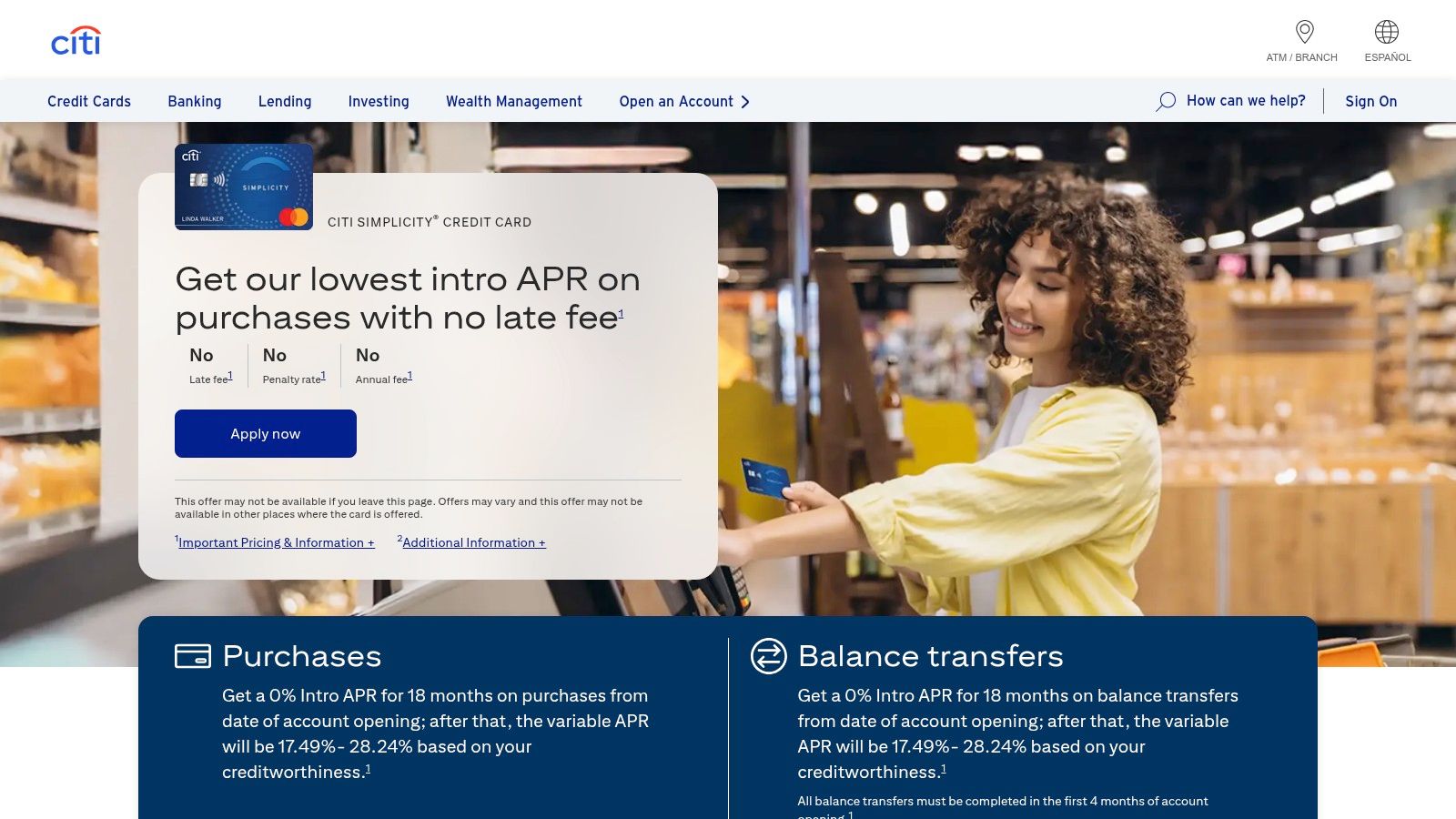
A long promotional window changes the payment math more than any cosmetic card feature. Citi Simplicity stands out because its value is concentrated in three variables that directly affect payoff cost: a 0% intro APR period on balance transfers for up to 21 months from account opening, no annual fee, and an intro balance transfer fee of 3% ($5 minimum) if the transfer is completed within the first 4 months, then 5% after that, based on the Citi Simplicity Card terms.
That combination makes it one of the clearest balance transfer tools in this list. It is built for borrowers who want time to retire principal and do not need rewards to justify keeping the account active after the balance is gone.
The Analyst View
Citi Simplicity works best as a repayment instrument, not an everyday spending card. The absence of rewards is a limitation if you want ongoing card utility, but it also makes the economics easier to evaluate. Your decision comes down to a short set of variables: the balance you plan to move, whether you can complete the transfer inside the lower-fee window, and whether your monthly payment schedule can eliminate most or all of the debt before the regular APR applies.
The card also reduces some operational risk. Citi markets no late fees and no penalty APR, which matters for borrowers who want extra margin against servicing mistakes. That does not make missed payments harmless. A late payment can still affect your credit profile and extend the payoff period. Autopay remains the safer setup.
For a practical example, a borrower transferring a large balance may prefer Simplicity over a shorter offer even if the transfer fee is similar, because a longer 0% period lowers the monthly payment needed to stay on schedule. That can improve completion odds. In balance transfer analysis, completion risk matters almost as much as the headline APR.
Key use cases are straightforward:
- You need a long payoff window: Up to 21 months is competitive at the top end of the category.
- You can act quickly: The lower intro fee only applies if the transfer is completed within the first 4 months.
- You want fewer penalty costs: No annual fee, no late fees, and no penalty APR make the card more forgiving than many peers.
- You do not need rewards after payoff: The card is strongest during the transfer period, not as a long-term spending product.
Issuer quality still matters if customer service, account management tools, or dispute handling are part of your decision. For broader issuer context beyond this card’s headline terms, review these top-rated banks for consumer credit products.
2. Citi Diamond Preferred Card
A one or two point difference in transfer fees can change the economics of a large refinance more than many borrowers expect. The Citi Diamond Preferred Card is a good example. Its headline value is the long 0% balance transfer period, but the key decision point is whether you can complete the transfer inside the lower-fee window.
According to the Citi Diamond Preferred Card terms, the card offers 0% intro APR on balance transfers for up to 21 months from account opening and no annual fee. Citi also typically applies a 3% intro balance transfer fee, with a $5 minimum, during the promotional transfer window, then 5% after that period ends. For borrowers transferring a meaningful balance, that fee step-up can erase part of the savings quickly.
This card fits borrowers who treat a balance transfer as a project with deadlines, not just an application. The payoff math is favorable if execution is tight. It is less forgiving if you delay the transfer request or underestimate the monthly payment required to clear the balance before the regular APR applies.
A simple framework helps. Start with the transfer amount, add the fee, then divide by the intro period to estimate the monthly payment needed for a full payoff. If the resulting payment is too high for your budget, the long promo period may still not solve the underlying debt problem. That practical lens matters more than the marketing headline, and it is why a broader review of banking and personal finance firms can help if you are comparing issuers on servicing, digital tools, and account management quality.
The Analyst View
Citi Diamond Preferred is strongest as a pure refinancing tool. It is weaker as a long-term wallet card because it does not offset its post-transfer role with meaningful rewards.
That creates a clear borrower profile:
- Best fit: You want a long 0% balance transfer period and can submit the transfer promptly.
- Key risk: Missing the lower-fee window raises the upfront cost and lowers total savings.
- Less suitable for: Cardholders who want rewards after the promotional period or need extra tolerance for payment mistakes.
One practical conclusion stands out. A card with the same intro APR length can produce a different outcome once transfer timing and fee structure are included. Citi Diamond Preferred works well for disciplined borrowers who will use the full toolkit: compare fees, submit the transfer early, and set a payoff schedule on day one.
3. Wells Fargo Reflect Card
The Wells Fargo Reflect Card is attractive for borrowers who want one long low-rate window covering both purchases and qualifying balance transfers. That matters if your debt plan isn’t purely about refinancing old balances, but also about avoiding interest on near-term essential spending while you stabilize cash flow.
The card offers 0% intro APR for 21 months from account opening on purchases and qualifying balance transfers, with transfers needing to be requested within 120 days of account opening to qualify for the intro APR. It also charges a 5% balance transfer fee with a $5 minimum, according to the Wells Fargo Reflect Visa details.
Why the Transfer Window Matters
A lot of borrowers focus only on the length of the intro APR. That’s incomplete analysis. Timing rules can be just as important as duration because missing the transfer deadline can erase the value proposition.
This card is strong if you’re organized. It’s weaker if you’re still gathering account details, waiting on statements, or moving slowly across multiple balances. The 120-day transfer window is clear and workable, but it still requires execution.
- Best use case: You want a long 0% period and know you’ll submit the transfer quickly.
- Main cost issue: The 5% fee is on the high side relative to lower-fee intro structures elsewhere.
- Behavioral fit: Better for planners than procrastinators.
For borrowers who want to compare lenders and financial brands more broadly, this field of banking and personal finance firms offers useful context.
A final caution applies here more than many people realize. If you use a transfer card for new purchases while also carrying the transferred balance, repayment can get messy fast. The card can still be useful, but only if you separate “stabilization spending” from “everyday spending” and keep the plan tightly controlled.
4. U.S. Bank Shield Visa (formerly Visa Platinum)
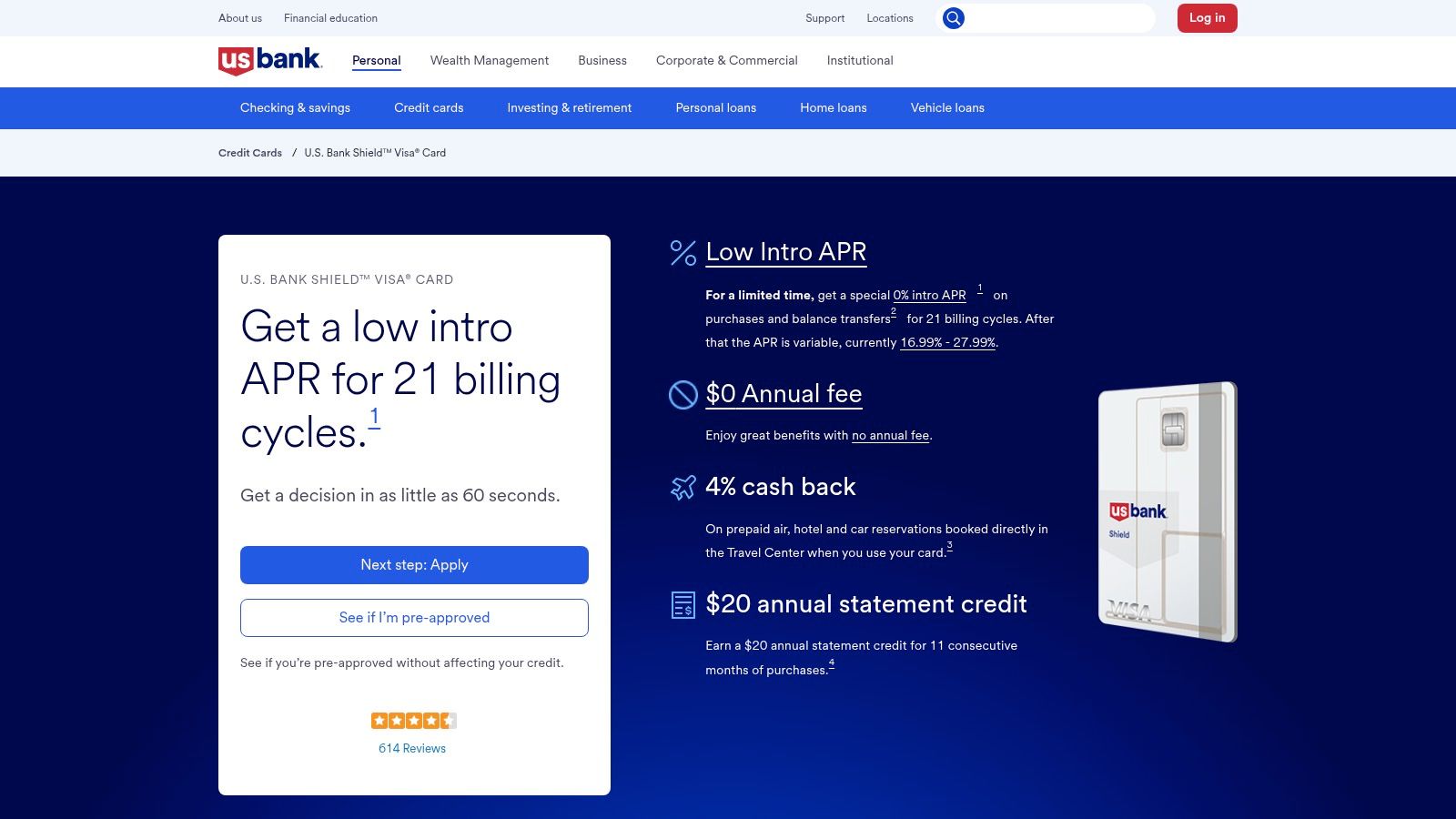
A 21-billing-cycle 0% offer ranks near the top end of the balance transfer market. U.S. Bank pairs that long runway with a tighter execution rule: transfers must post within 60 days of account opening, and each transfer costs 5% of the amount moved, with a $5 minimum, according to the U.S. Bank Shield Visa page.
That combination makes Shield Visa less of a passive safety net and more of a planned debt-reduction tool. The card can produce meaningful savings, but only if the borrower treats the transfer deadline, fee, and payoff pace as one calculation rather than three separate features.
Strong Fit for Borrowers With a Ready-to-Execute Plan
The practical question is not whether 21 billing cycles sounds attractive. It is whether you can submit the transfer promptly and use that period efficiently.
A simple example shows why. On a $6,000 balance, a 5% transfer fee adds $300 upfront. If the existing card carries a high APR and repayment would otherwise take well over a year, that fee can still be economical. If the balance is small or would be paid down quickly anyway, the fee consumes more of the benefit. This is the kind of card that works best with a payoff schedule already mapped out, which is why comparing issuers across top-rated banks for consumer credit products can help frame whether U.S. Bank’s terms match your timing and cost priorities.
The non-obvious risk is operational, not promotional. Borrowers often focus on the 0% period and underestimate the 60-day transfer window. If account numbers, payoff amounts, or issuer details are not ready, the offer can lose value before the repayment plan even starts.
Decision filter: Treat the transfer deadline as part of the card’s cost structure. A long intro APR only helps if the balance moves in time and the fee is justified by the interest you avoid.
Shield Visa is strongest for organized borrowers consolidating a meaningful balance at a high existing APR. It is less compelling for smaller transfers, slower decision-makers, or anyone who has not yet built a month-by-month payoff plan.
5. BankAmericard Credit Card
A 5% transfer fee changes the economics faster than many borrowers expect. That is why BankAmericard deserves a more analytical review than a standard “long intro APR” mention.
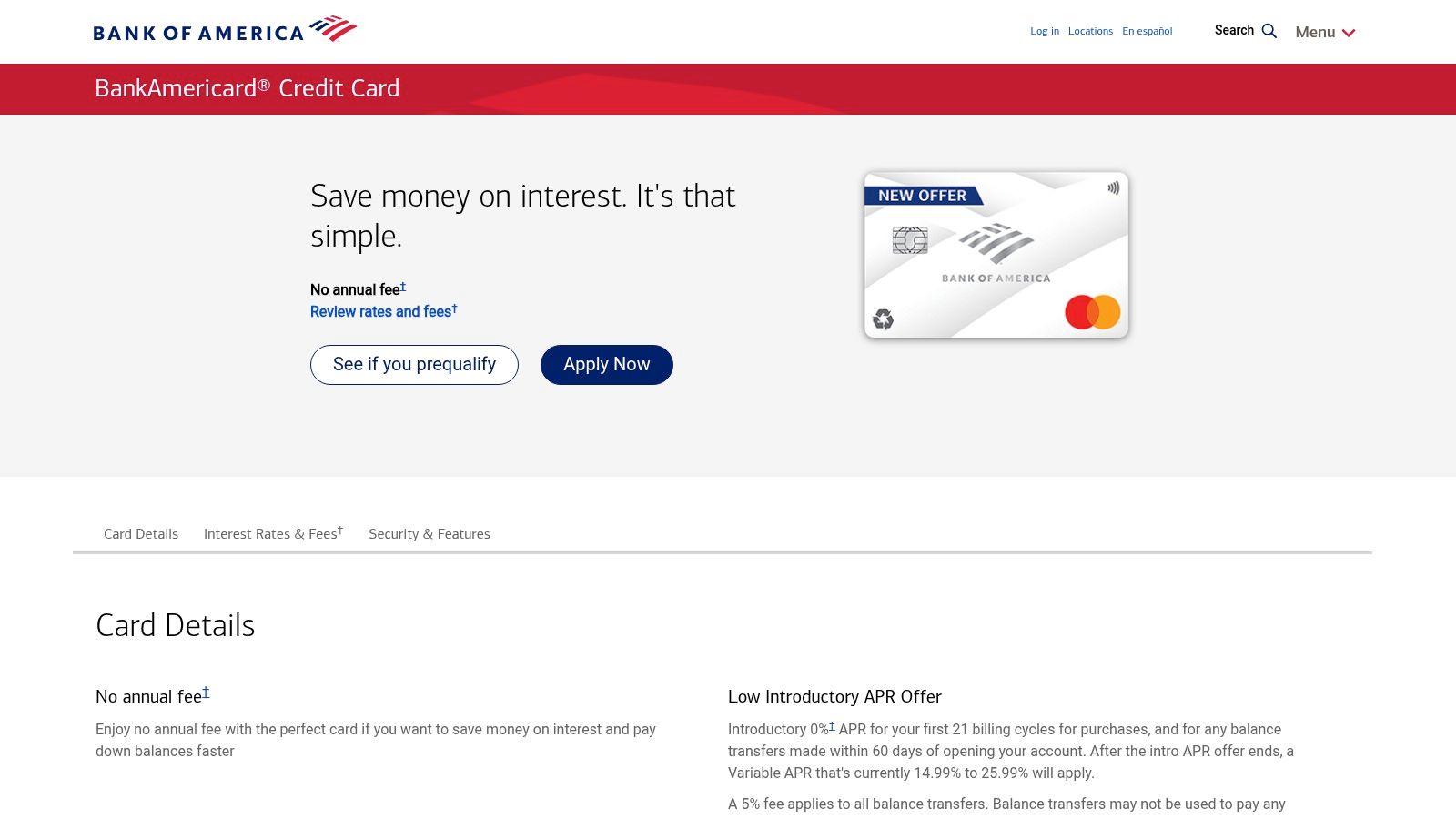
The card offers 0% intro APR for the first 21 billing cycles on purchases and on balance transfers made within 60 days of account opening, with a 5% balance transfer fee and no annual fee, according to the BankAmericard Credit Card page. It also advertises no penalty APR, which adds a layer of rate stability for cardholders who want fewer surprises while they pay down transferred debt.
Analyzing the Cost-Benefit of the Transfer Fee
BankAmericard is strongest for borrowers who need duration and already know their payoff path. The longer intro window gives this card a different role from shorter promotional offers. It can support a slower repayment schedule, but only if the fee is offset by enough avoided interest.
A simple framework helps. Start with the transfer amount, add the 5% fee, then compare that cost with what the current card would charge in interest over the same payoff period. If the existing APR is high and repayment would otherwise stretch well beyond a few months, BankAmericard can produce meaningful savings. If the balance is modest or would be cleared quickly anyway, the fee takes a larger share of the benefit.
That makes this card less of a general-purpose recommendation and more of a planning tool.
Its fit is clearest in three cases:
- You need a long runway: Up to 21 billing cycles gives more margin for a structured monthly payoff target.
- You prefer a plain balance transfer card: There is no rewards system competing for attention while you are focused on debt reduction.
- You can act within the transfer window: The offer applies to transfers made within 60 days of account opening, so preparation matters.
This section works best alongside the article’s broader toolkit. Use the term length, fee, and your current APR to estimate savings before applying, then follow the transfer steps carefully so the promotional period is used efficiently from the start. For issuer-level context beyond this single product, compare terms across top-rated banks offering consumer credit products.
Decision filter: BankAmericard is a better fit for large balances, high existing APRs, and borrowers who value time over rewards. It is a weaker fit when the balance is small enough that the transfer fee erodes most of the interest savings.
6. Citi Double Cash Card
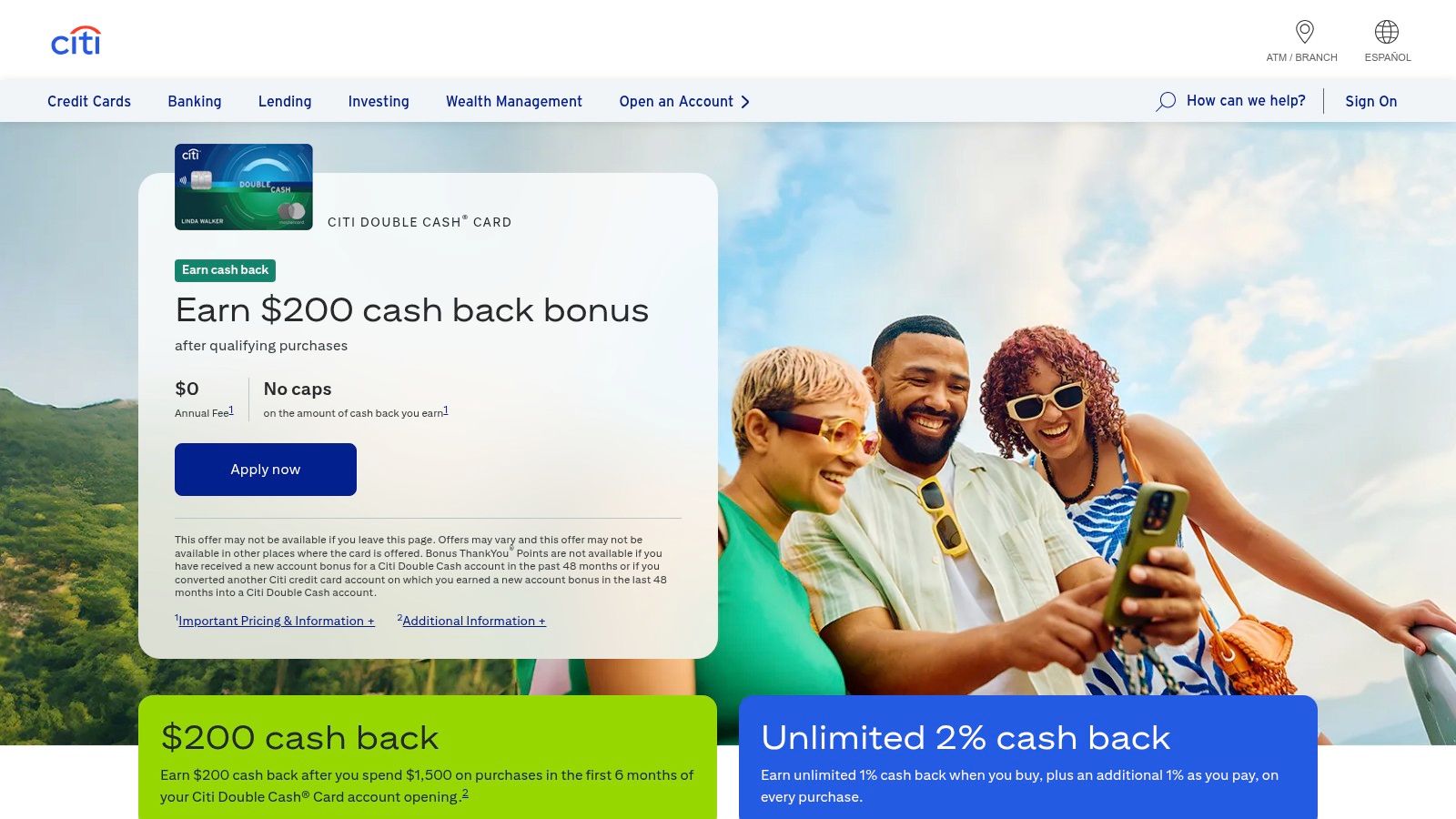
A card that can refinance debt and still justify a place in your wallet after payoff is relatively uncommon in this category. The Citi Double Cash Card stands out for that reason. It offers 0% intro APR for 18 months on balance transfers from account opening, a 3% intro balance transfer fee ($5 minimum) on transfers completed in the first 4 months, 2% cash back on purchases, and no annual fee, according to the Citi Double Cash Card page.
The tradeoff is straightforward. Some cards in this roundup offer a longer promotional period, but few combine a long enough runway for many payoff plans with a flat-rate rewards structure that remains useful after the balance is gone. For borrowers who want one application to solve two jobs, debt transfer now and everyday spending later, that combination has real value.
A simple savings test shows where this card fits. On a $6,000 balance, the introductory fee would be $180 if the transfer qualifies for the 3% rate. If your current card carries a high APR and repayment would otherwise stretch across a year or more, avoiding that interest can still leave meaningful net savings. The article’s transfer calculator and payoff steps matter here because this card works best when you set the monthly target before applying, complete the transfer inside the promotional window, and avoid adding new revolving debt during repayment.
The rewards feature is useful after payoff, but it creates a discipline issue during payoff. Using the card for new purchases while a transferred balance is still outstanding can complicate interest charges and payment allocation in ways that reduce the benefit of the transfer. A plain balance transfer card removes that temptation. Citi Double Cash does not.
That makes this a selective recommendation rather than a universal one.
Choose it if you want a practical exit path from promotional financing. Skip it if your only priority is the longest possible 0% period and you have no interest in keeping the account for everyday spending. In a curated list of top balance transfer cards, Citi Double Cash earns its place because it adds a second use case, and that can improve the long-term economics of opening the account.
7. Navy Federal Credit Union Platinum Card
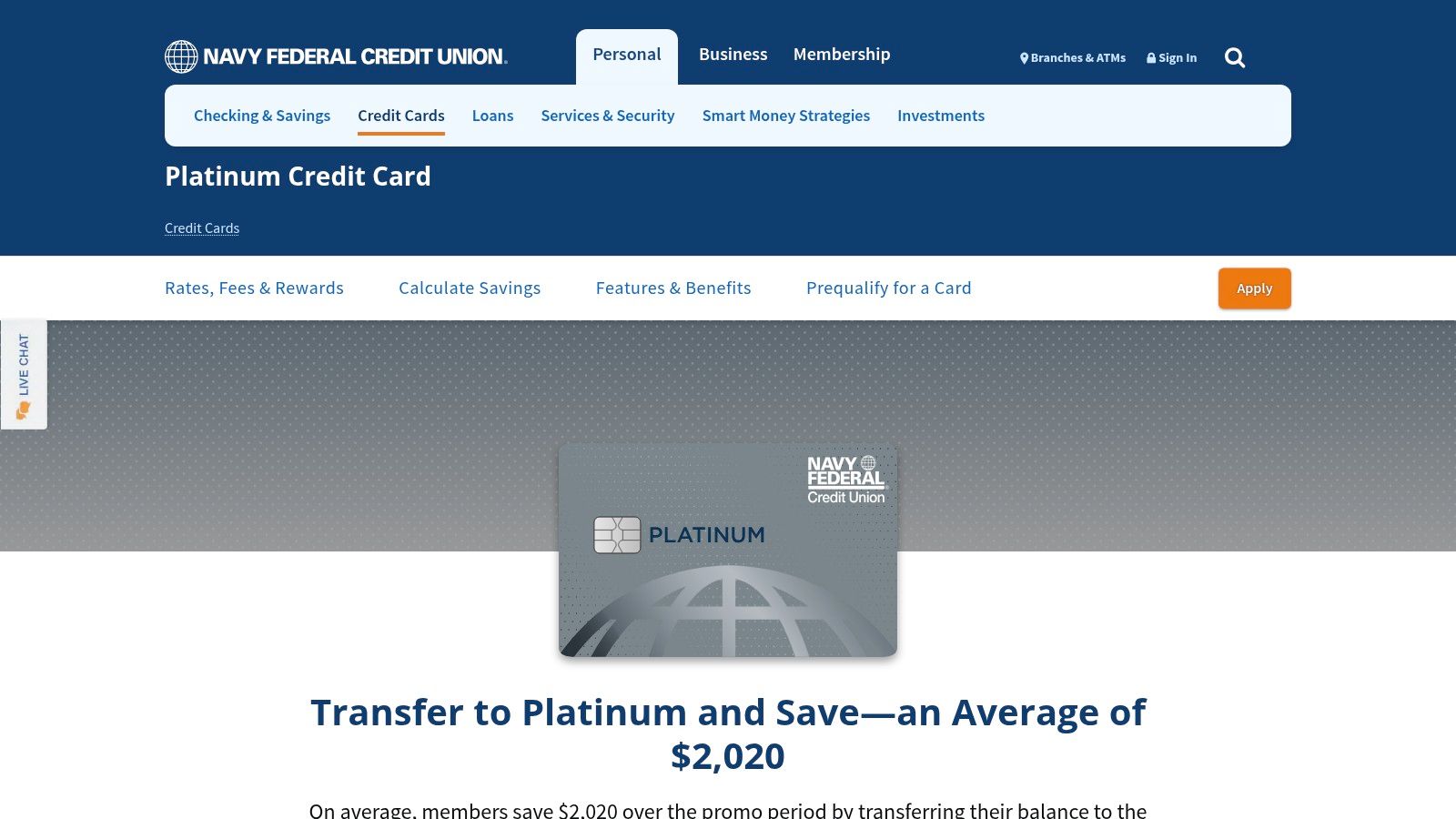
The Navy Federal Credit Union Platinum Card is the outlier in this list because it attacks the problem from the fee side rather than the 0% side. As of June 2, 2026, it offers a 0.99% intro APR for 12 months on balance transfers made within 60 days of account opening, no balance transfer fees, no annual fee, and no foreign transaction fees, according to the Navy Federal Platinum Card page.
For eligible members, that no-fee structure is a real market differentiator. In a category where fees often drive the economics, eliminating the transfer fee can materially improve the math.
Why This Card Can Beat Longer 0% Offers
A lot of borrowers fixate on 0%. That’s understandable, but it isn’t always optimal. If another card gives you 0% but charges a high upfront fee, and Navy Federal charges no transfer fee with a low intro APR, the no-fee option may come out ahead on certain balances and payoff schedules.
That matters because fees across the category have been getting more expensive. As of early 2025, LendingTree identified 109 cards from 31 issuers offering 0% balance transfer promotions, but 44% carried a one-time transfer fee of 4% or 5%, while 51% charged 3%, according to LendingTree’s balance transfer offers study. In that market, “no transfer fee” isn’t a footnote. It’s a pricing advantage.
The limitation is access. Membership is required, and the intro period is shorter than many national-bank competitors. Still, if you qualify and your payoff horizon is relatively short, this card can be one of the most rational choices on the board.
Top 7 Balance Transfer Card Comparison
| Card | Complexity 🔄 | Requirements 💡 | Expected outcomes ⭐📊 | Ideal use cases ⚡ | Key advantages |
|---|---|---|---|---|---|
| Citi Simplicity Card | Low, simple terms, watch 21‑month BT window and fee timing | Typical credit approval; no membership | ⭐⭐⭐, maximizes interest‑free payoff time for large balances | Best for transferring large balances and paying down slowly | Extra‑long 0% BT (21 mo), no late fees or penalty APR |
| Citi Diamond Preferred Card | Low, straightforward setup, 21‑month promo | Typical credit approval | ⭐⭐⭐, long interest‑free runway with predictable costs | Plain, low‑cost payoff card to keep on hand | Long 0% BT period, $0 annual fee |
| Wells Fargo Reflect Card | Medium, transfers must be requested within 120 days; 5% BT fee | Typical credit approval | ⭐⭐⭐, long 0% on purchases + transfers increases flexibility | Good when you need extended time on purchases and transfers | 21‑month promo for purchases and transfers; clear 120‑day BT window |
| U.S. Bank Shield Visa | Medium, transfers within 60 days; standard BT fee; rebrand caveats | Typical credit approval; verify current terms | ⭐⭐⭐, lengthy 0% intro on purchases & transfers (21 cycles) | Ideal for extended payoff and keeping card benefits | Long intro APR, $0 annual fee, added perks (e.g., cell‑phone protection) |
| BankAmericard Credit Card | Low‑Medium, transfers within 60 days; 5% BT fee | Typical credit approval | ⭐⭐⭐, long 0% intro to minimize interest during payoff | Disciplined borrowers wanting a simple, low‑cost card | 21 billing cycles, $0 annual fee, no penalty APR |
| Citi Double Cash Card | Low, 18‑month BT window; BT fee timing matters; loses purchase grace if carrying BT | Typical credit approval | ⭐⭐⭐⭐, good BT term plus strong long‑term rewards value | For those who want rewards after paying down a transfer | 18‑month BT + ongoing 2% cash back (1% buy + 1% pay) |
| Navy Federal Platinum Card | Medium, membership required; shorter promo but no BT fee | Membership eligibility (military, veterans, family, etc.) | ⭐⭐⭐, low upfront cost; shorter intro period (current promo varies) | Members prioritizing low transfer cost over longest term | No balance‑transfer fees, $0 annual fee, member‑friendly terms |
Balance Transfer FAQs and Best Practices
U.S. revolving credit card balances are projected to reach $1.18 trillion by the end of 2026, according to the TransUnion 2026 consumer credit forecast. In a market this large, balance transfer cards are best viewed as short-term refinancing tools. The card matters, but execution determines whether you save money.
Start with the economics, not the marketing. A typical balance transfer fee is 3% to 5%, or about $30 to $50 per $1,000 moved, based on Bankrate’s balance transfer card guide. That means a $7,500 transfer can cost $225 to $375 upfront. If the interest avoided during the intro APR window does not clearly exceed that fee, the transfer is weak on financial grounds.
That framing changes how to compare the cards listed above. The longest 0% period is not always the best option. A shorter offer with no transfer fee can produce better net savings for a smaller balance, while a longer intro APR can matter more for a five-figure payoff plan. The practical toolkit is simple. Estimate the fee, divide the transferred balance by the promo term, and test whether that monthly payment fits your budget without new borrowing.
How to execute a transfer cleanly
A clean transfer usually follows the same sequence:
- Calculate your target payment before you apply: Divide the full balance, plus any transfer fee, by the number of 0% months or billing cycles.
- Confirm the transfer deadline in the card terms: Some issuers require transfers soon after account opening. Treat that deadline as the primary test for whether you’ll benefit.
- Request the transfer early: Processing can take time, and delays can reduce the value of a promotional window.
- Keep paying the old account until the new issuer shows the transfer as completed: A pending request does not eliminate the risk of a late payment.
- Avoid new purchases on the transfer card if possible: Carrying a transferred balance can make repayment less disciplined and may complicate interest charges once the promo ends.
- Review the regular APR before you commit: If any balance survives past the intro period, the ongoing rate becomes the next cost driver.
A quick example shows why this matters. Suppose you transfer $10,000 with a 5% fee. Your starting balance becomes $10,500. On a 21-month intro offer, the required payment to clear it during the promo period is about $500 per month. If your realistic payment capacity is closer to $300, the card may still reduce interest, but it is not a full solution. You would be entering the back end of the offer with residual debt and a much higher variable APR risk.
Two operating rules improve outcomes. Set autopay for at least the minimum payment so the promotional APR is not jeopardized by a missed due date. Then schedule a separate recurring principal payment tied to payday or another fixed cash-flow event.
Behavior matters as much as credit profile. A transfer works best when it replaces expensive debt and spending slows at the same time. If balances continue to build on the old card or the new one, interest savings shrink quickly.
If you’re comparing card transfers with other debt strategies, it’s worth reading a guide for business debt management for a broader framework on how debt restructuring decisions work. The consumer version follows the same math. Lower APRs help only when the balance also moves down on schedule.
* Disclaimer: Kudosz is not a financial advisor and our Top 5 Best-Rated ratings are not financial advice. This information is for educational purposes only and does not constitute financial advice. Doing business with any providers noted is at your own risk.